What Do Termite Droppings Look Like?
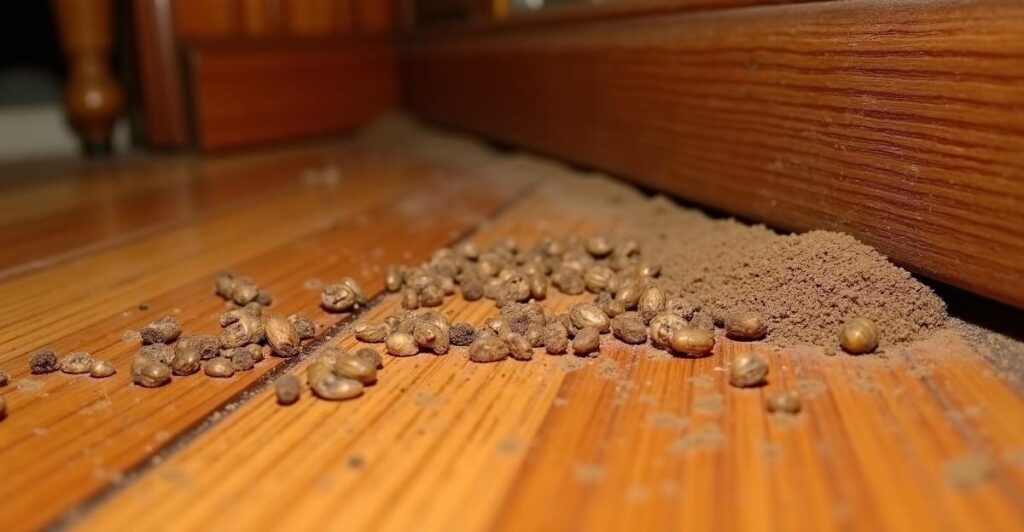
Drywood termite droppings give a strong early signal that termites may be inside wooden structures. These droppings look like small piles of pepper or coffee grounds. They often show up near baseboards, windowsills, or furniture. The pellets are oval-shaped and easy to spot once you know what to look for.
Key Takeaways
- Termite droppings, known as frass, are dry and shaped like pellets. They come in shades from light to dark brown and show small ridges on the sides.
- Frass tends to build up in small piles near floor moldings, window frames, attics, or crawl spaces.
- They differ from ant debris or sawdust. Termite droppings are hard, uniform, and free from other materials.
- Finding frass indoors clearly points to active drywood termites living in nearby wooden sections.
- Spotting frass early lets us take control before any major damage sets in.
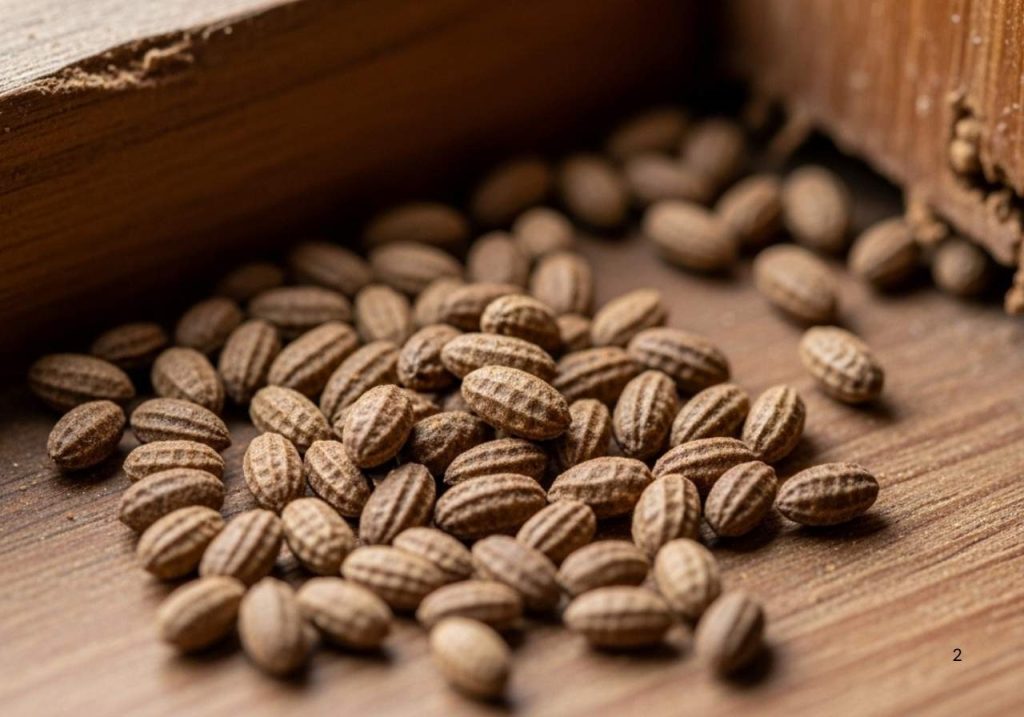
What Termite Droppings Typically Look Like
Termite droppings—also called termite frass—are one of the more noticeable signs of termite activity, especially from drywood termites. These droppings are small, oval-shaped pellets that range in color from light brown to dark brown. If you’ve ever seen finely ground coffee or coarse pepper sprinkled on a windowsill, you’ll have a good sense of what they look like.
Each pellet is about 1mm in length and often has subtle ridges or dimples along its sides, as described by university extension entomology guides on drywood termite frass identification. They’re hard to the touch, dry, and typically accumulate in small piles. Because of their uniformity, they can stand out when compared to other debris if you know what to look for.
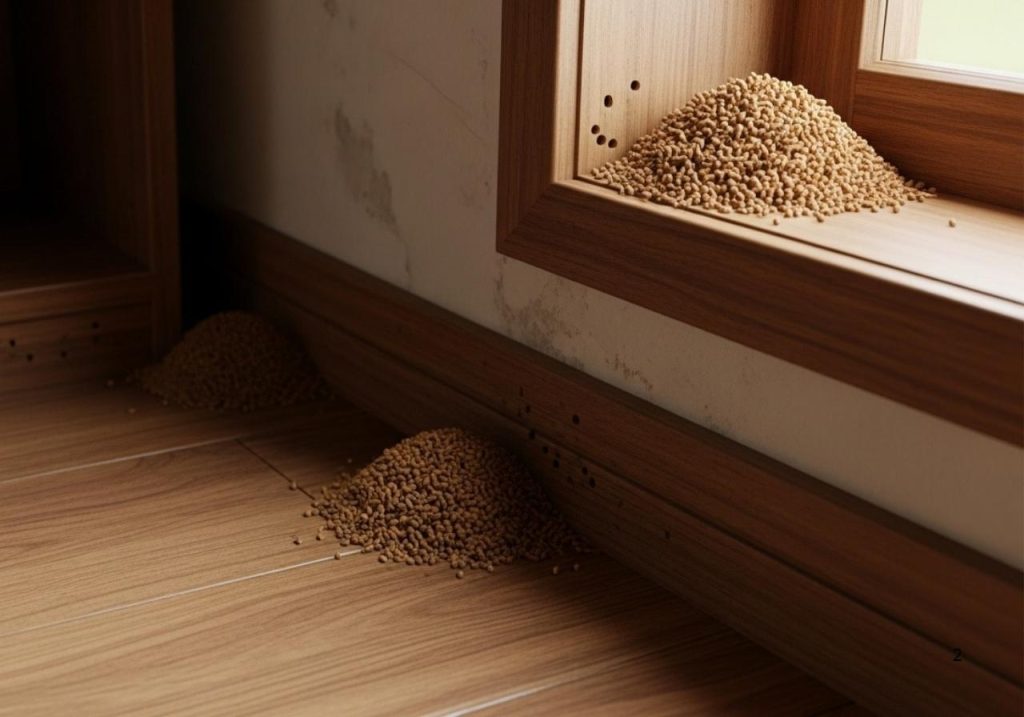
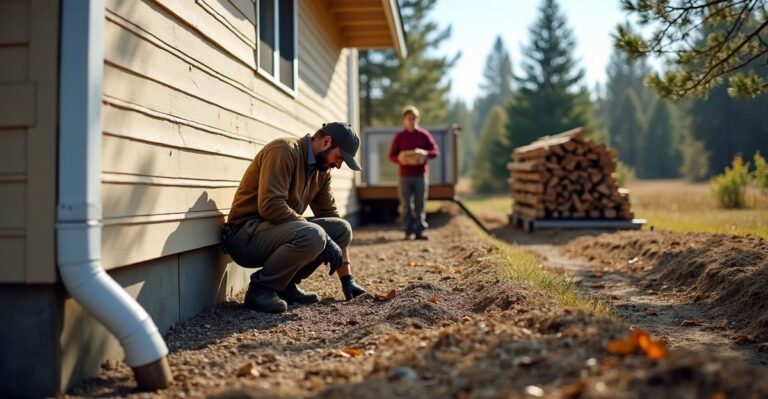
Where You’ll Usually Find Termite Droppings Around the House
Drywood termites create small exit holes in wood and push their waste out—behavior documented in state university extension resources on drywood termite biology—which causes droppings to gather nearby. Since these termites live entirely within the wood they eat, they keep their galleries clean by ejecting frass outside.
Look for termite droppings in the following areas:
- Along baseboards and indoor wall trim
- On windowsills, especially near wooden window casings
- Beneath or behind wooden furniture and shelving
- Inside attics or crawl spaces with exposed beams
At first glance, frass can be mistaken for dust or sawdust. But its pellet shape and the consistency of the material set it apart, especially once you know the signs. These small piles are often a clue to termite infestation signs and help us identify where activity might be occurring within your walls, furniture, or framing.
Termite Droppings vs. Ant Droppings vs. Sawdust: Spotting the Difference
It’s easy to misidentify termite frass, especially if you’re comparing it with other household debris. Here’s a guide to help sort the differences:
How to tell apart common substances
Understanding “termite poop vs ant poop” or frass from sawdust can help prevent misdiagnosing a serious issue:
- Termite Droppings: Pellet-shaped, dry, uniform, with visible ridges—often found in small piles. Looks like tiny brown footballs.
- Ant Frass: Irregular texture with insect body parts or food bits mixed in. Appears messy and varied.
- Sawdust: Fine, flaky, and usually spread out instead of piled. Comes from mechanical woodwork or carpenter ants, not drywood termites.
Each has unique traits, and the difference becomes clear with a closer look.
Why Termite Droppings Matter (and What They Might Be Telling You)
Spotting termite frass in your home is a strong sign that drywood termites are active and feeding. Unlike subterranean termites that create mud tubes—explained in EPA guidance on the differences between termite species—drywood termites live within the wood and push their droppings out through exit holes.
Seeing termite droppings around your baseboards or windowsills means there’s a nest inside the wooden materials nearby. This is one of the earliest signs of termite activity and can give you a critical head start in stopping the problem before it gets worse.
Catching this early—before structural damage begins—can make all the difference. That’s where experienced eyes and routine assessments come in handy.
What to Do If You Find Droppings: Calm, Practical Next Steps
Finding termite droppings inside your home doesn’t automatically mean severe damage—but it does mean act now. Here’s how we suggest you start:
Steps to take for peace of mind
- Inspect wooden furniture and baseboards for small holes or blistered paint.
- Tap wood in suspected areas and listen for a hollow sound.
- Check for additional signs like wings, mud tubes, or more frass.
- Monitor common trouble spots like attics and crawl spaces.
If you’re unsure or want to confirm what you’ve found, it’s best to reach out to a local expert. Our team can help identify the issue and provide inspection services. If you’re in Idaho Falls, Rigby, or anywhere nearby, help is just around the corner. We’d be happy to check it out so you can be confident your home is protected.
If you aren’t sure whether calling is the right move, check out this guide on when to call an exterminator—it covers common moments when it’s smart to bring in support.
What Termite Issues Look Like in Eastern Idaho Homes
Homes across Eastern Idaho are mostly at risk during warmer months—typically April through September—based on National Weather Service climate data for Idaho Falls and surrounding areas. Drywood termites, while less common than subterranean termites, can still do damage to structural framing, window trim, and wooden furniture—especially in areas where older wood is exposed and untreated.
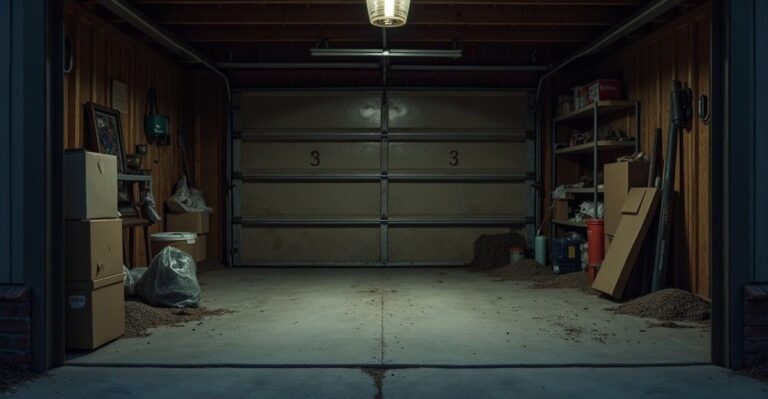
Sheds, garages, attics, and basements are common starting points. Many homes in our area also have wooden siding, which can be an easy entry point for termites if it’s weathered or cracked.
We once helped a Rexburg homeowner who thought she’d spilled some pepper on her windowsill. Turns out it was drywood termite droppings. Our local team spotted early signs and helped her stop the infestation before any major repairs were needed. That’s the key—catching signs early.
As a family-run service deeply familiar with Idaho homes, we take pride in helping our neighbors with practical, trusted pest protection. Whether you’re dealing with rodents, cockroaches, or looking into residential pest control, we’re here to help.
If you suspect termite droppings or want to learn more about other seasonal threats, our pest control blog is full of simple, trustworthy advice.
Drywood termite droppings are one early clue you don’t want to ignore. And with local experts by your side, you won’t have to. If you’d like help from a friendly, experienced team, get in touch with us today.
Frequently Asked Questions
The most common signs of termite activity include small piles of pellet-shaped droppings, hollow-sounding wood, blistered or bubbling paint, and discarded wings near windows or doors. These signs indicate termites are actively feeding inside wooden materials. Early detection is important because termites often remain hidden until noticeable damage or debris appears.
Termite droppings usually signal active drywood termites nearby. Fresh frass is dry, uniform, and collects in small piles beneath wood surfaces where termites are feeding. Because drywood termites live inside the wood, finding droppings indoors almost always means termites are currently present, not just past activity.
Yes, termite activity is often confused with ants, sawdust, or general dust buildup. However, termite droppings are hard, pellet-shaped, and uniform, unlike ant debris or construction dust. Misidentifying the signs can delay treatment, allowing termites to continue damaging structural wood unnoticed.
Homeowners should first check baseboards, window sills, door frames, attics, crawl spaces, and areas with exposed or older wood. Drywood termites often push droppings out of small exit holes, so debris collecting near trim or furniture is a strong indicator of nearby termite activity.
Action should be taken as soon as any signs of termite activity are noticed. Even small amounts of droppings or minor wood damage can indicate an ongoing infestation. Early response helps limit structural damage and reduces repair costs, making professional inspection a smart next step once signs appear.