
Are Clover Mites Harmful to Humans?
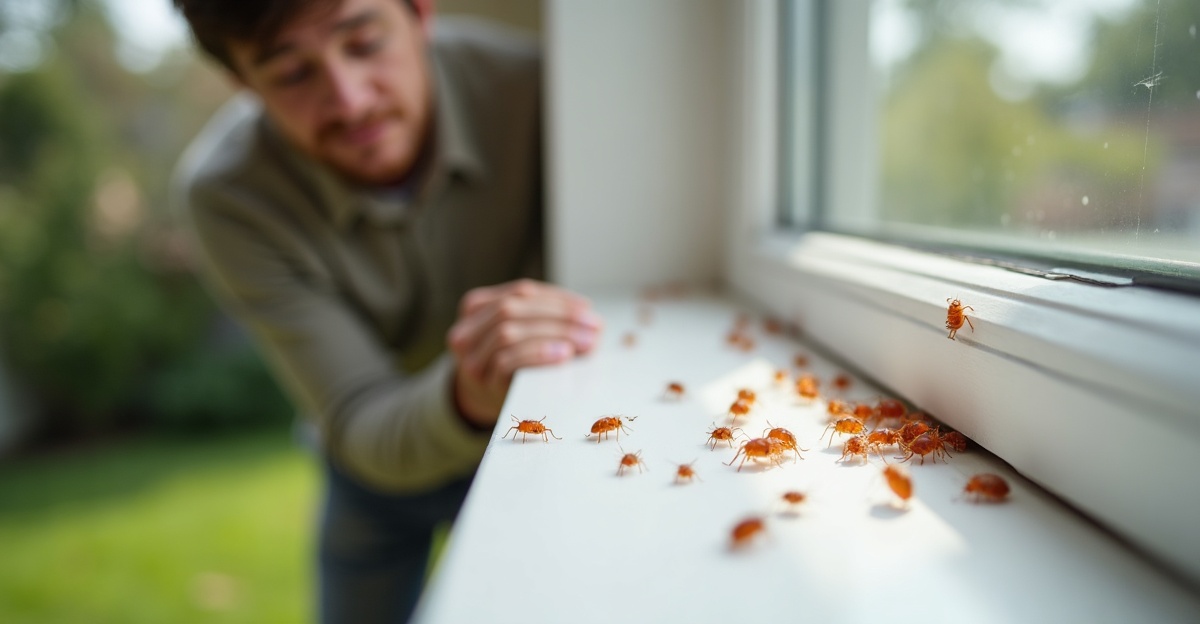
We often hear concerns about tiny red mites gathering along windows and walls in spring or fall. Many homeowners ask, are clover mites harmful to humans, especially when these pests appear in large numbers. We reassure our clients that clover mites do not bite, spread disease, or threaten people or pets. They feed on plants and sometimes wander indoors from nearby lawns, which makes them a nuisance rather than a danger.
Key Takeaways
- Clover mites are not harmful to humans, children, cats, or dogs.
- They do not bite or feed on blood, and people often confuse them with other tiny red pests.
- Indoor sightings usually occur during spring and fall when temperature shifts drive them indoors.
- Clover mites are nuisance pests that can leave red stains if we crush them on walls or fabrics.
- We can prevent repeated outbreaks by sealing entry points, adjusting landscaping, and applying exterior treatments.
Clover Mites Are Not Harmful to Humans
Clover mites are not harmful to humans. They don’t bite, and they don’t spread disease.
We often hear about “clover mite bites,” but that’s a common mix‑up. Clover mites do not bite people. Reports of bites usually turn out to be other tiny red pests or unrelated skin irritations. Clover mites are plant feeders. They have no interest in blood.
There is no true clover mite danger to people or household pets. Dogs, cats, and children are safe. While seeing red mites in the house can feel unsettling, they are a nuisance pest, not a health threat.
For homeowners who want a deeper look at this topic, we explain it clearly here: are clover mites dangerous. The short answer remains the same. They’re frustrating, but they’re not harmful.
Why You’re Seeing Red Mites in Your House
Clover mites follow seasonal patterns here in Eastern Idaho. In Idaho Falls, Twin Falls, Pocatello, Rexburg, Rigby, and surrounding areas, they’re most active in spring and fall. Mild temperatures help their populations grow quickly.
Temperature swings often push them indoors. When conditions outside become too hot, too cold, or suddenly change, they look for shelter. Homes provide warmth and protection.
These mites commonly gather on sunny exterior walls. From there, they slip inside through tiny cracks and gaps around:
- Window frames
- Door thresholds
- Siding seams
- Foundation openings
Even very small openings are enough. Once inside, they usually collect along window sills and bright walls.
Large populations often develop in well‑fertilized lawns or areas with thick vegetation close to the foundation. Lush grass and clover give them plenty to feed on. If lawns touch the home, mites have an easy bridge indoors.
Outbreaks are common in our region. They don’t mean a home is dirty. In fact, clean homes experience them just as often. We talk more about that in can bugs survive in clean homes. Clover mites are outdoor pests that wander inside by accident.
What Problems Can Clover Mites Cause?
Clover mite danger is about nuisance and mess, not health.
When crushed, they leave behind a reddish stain. That pigment can mark painted walls, curtains, carpets, and window frames. The stains are sometimes difficult to remove, especially from light-colored surfaces.
Large numbers can also be frustrating. Homeowners may see clusters of tiny moving red dots along:
- Sunny windows
- Sliding glass doors
- Baseboards near exterior walls
Even though they’re harmless, the sight of dozens or hundreds of mites indoors can feel overwhelming. That reaction is understandable. No one wants insects moving along their walls.
If mites appear inside, vacuuming is the best first step. Avoid crushing them with a cloth or hand, since that’s what causes staining. A vacuum with a hose attachment works well for immediate cleanup.
For larger or repeated outbreaks, professional help can prevent more from entering in the first place. Our clover mite control services focus on stopping them at the exterior before they move inside.
How Clover Mites Are Different from Other Biting Pests
It helps to know what clover mites are not.
They are not bed bugs. They are not ticks. They are not biting mites. Clover mites feed on grasses, clover, and other plants. Their mouthparts are made for plant material, not skin.
Their presence indoors is accidental. Homes are not their intended habitat. They don’t reproduce inside in the way bed bugs do. They don’t infest furniture, bedding, pets, or people.
Because they are small and red, they are often confused with pests that can bite. That confusion fuels online searches for “clover mites bites.” Clearing up that misunderstanding brings peace of mind. If red mites are visible on walls or window sills and no biting is occurring, clover mites are likely the cause.
If the insects are biting, we recommend an inspection to identify the real source. Proper identification always comes first in effective pest control.
Simple Prevention Steps That Help Keep Them Out
Simple changes around the home can make a noticeable difference. Start with basic exclusion. Seal cracks and gaps around windows, doors, and foundations using quality caulk. Repair worn weather stripping. Make sure window screens fit tightly.
Next, look at landscaping. Creating a vegetation‑free strip about 12 to 18 inches wide around the foundation reduces access. This strip can be rock, gravel, or bare soil. Trim back shrubs and grass that touch the siding. Avoid over‑fertilizing grass near exterior walls, since thick growth supports larger mite populations.
Exterior perimeter treatments can also help. These treatments form a barrier around the home’s foundation, reducing the number of mites that reach entry points. Applied correctly and safely, they focus on the outside where the problem begins. Many homeowners have questions about safety inside the home, and we address those in are pest control products harmful indoors.
For ongoing protection, a seasonal plan can be helpful. Our residential pest control services are built around the pests common in Eastern Idaho, including spring and fall mite activity. We keep it simple and practical.
When to Call a Local Professional You Trust
Sometimes clover mites persist despite sealing and landscaping efforts. If red mites in the house keep returning, a professional inspection can identify overlooked entry points and exterior hot spots.
We’ve worked with homeowners across our Eastern Idaho service area for years. Seasonal clover mite activity is something we see every spring and fall. Our approach stays focused on calm, effective solutions that protect homes without unnecessary treatments.
Peace of mind matters. Homes should feel clean and comfortable, not stressful. If additional reassurance would help, we’re ready to assist. A simple visit can confirm the pest, explain what’s happening, and lay out straightforward next steps.
Scheduling an evaluation is easy through our contact page. We’re proud to serve our neighbors with steady, dependable care and practical answers that make sense for local families.