Can Pests Come Through Drains?
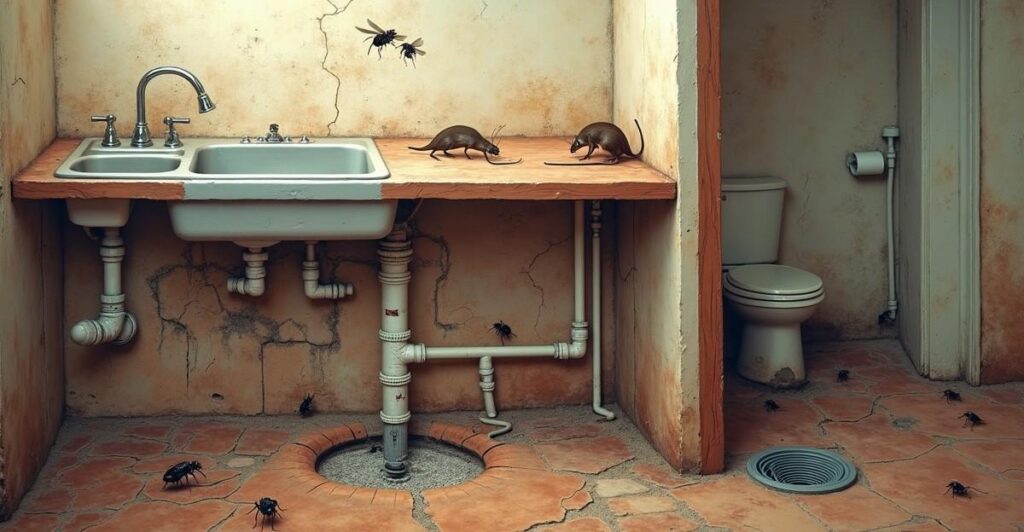
Pests getting through drains present a serious issue for many homeowners, especially where plumbing shows signs of age or excess moisture builds up. Insects such as drain flies and cockroaches, along with larger intruders like rats, often exploit damaged or open pipes as unseen entry points into kitchens, bathrooms, and basements.
Key Takeaways
- Pests known to enter through drains include drain flies, cockroaches, rats, centipedes, and silverfish.
- Gaps in pipes, loose drain covers, and worn-out seals give pests an easy way in.
- Drains offer a steady source of moisture, shelter, and food debris, attracting unwanted visitors.
- Warning signs include bad smells from drains, spotting insects, or hearing odd noises and finding droppings near sinks and tubs.
- Routine upkeep—cleaning out drains, sealing cracks, and repairing leaks—keeps pest problems from starting.
Common Pests That Enter Through Drains (and Why It Happens)
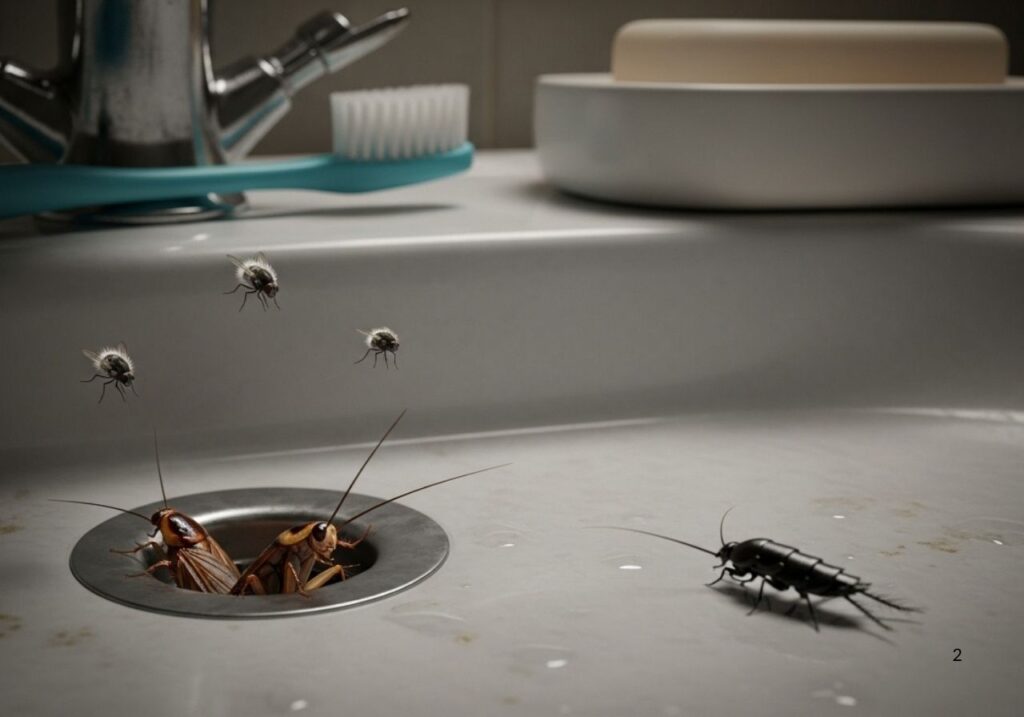
Pests entering through drains may sound like something out of a home horror story, but it’s far more common than most of us realize. You’re brushing your teeth and see a bug crawl out of the sink—what does it mean? It likely means some unwanted guests have found a cozy path into your home through the plumbing.
Here’s a closer look at some familiar pests that come up through the pipes—and why they’re there in the first place:
Pests You Might See Coming from Your Drains
In homes, restaurants, and even farm buildings across Eastern Idaho, we see these culprits most often:
- Drain flies: Also called sewer flies, these tiny, fuzzy insects thrive in slimy drain residue. If you’re seeing drain flies in the house, they’re probably breeding in the gunk lining your pipes.
- Cockroaches: Yes, the answer is yes—can cockroaches come up the drain? Absolutely. They’re known to climb through sewer systems and plumbing entry points—a behavior documented by university extension entomology programs studying urban cockroach movement—especially in older homes.
- Rats: Larger rodents navigate sewer systems with surprising ease—a pattern noted in EPA guidance on urban rodent control—often appearing in basements or near floor drains after heavy rains or flooding.
- Centipedes & silverfish: These moisture-loving insects slip into homes through damp, poorly sealed drains—often in bathrooms or utility sinks.
In places like Rexburg’s aging neighborhoods or the wet, food-heavy drains inside back kitchens in Idaho Falls restaurants, it’s easy to see how pests in plumbing become a recurring issue. Agricultural storage buildings near Pocatello also draw these pests, especially those with open-floor drains and inconsistent cleaning routines.
Why do drains attract pests in the first place? Moisture, food particles, decaying organic matter, and a lack of regular maintenance make them ideal homes. Once inside, pests settle in and spread.
How Bugs Get Through Drains and What Makes Them Stay
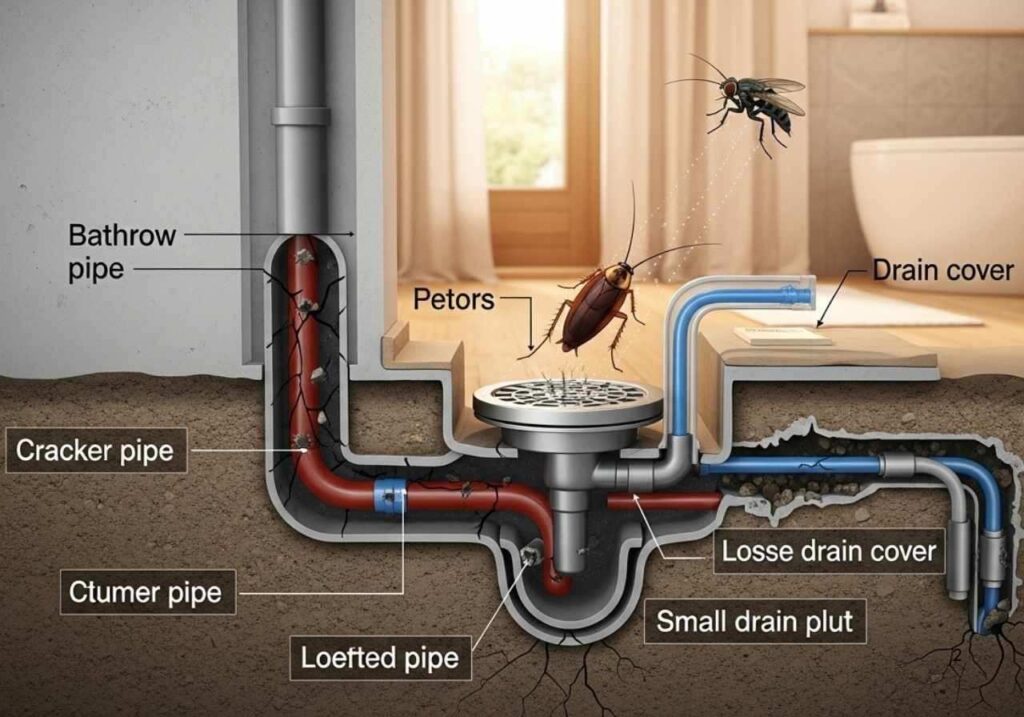
A common question we hear is how bugs get through drains in the first place—aren’t plumbing systems sealed off? Not always. Small openings can create big opportunities.
Points of Entry Into Drain Systems
Pests squeeze in through:
- Broken or damaged pipe seals
- Cracked or shifting pipes—a common issue in regions affected by freeze–thaw cycles, as explained by the University of Idaho Extension—can create entry points for pests
- Gaps around sewer lines
- Loose or missing drain covers
These weaknesses link moist indoor pipe systems to the outdoors and nearby sewer lines. In places where winter hits hard, like Eastern Idaho, shifts in underground pipes can create cracks or breaks that linger unnoticed until warm spring months bring pests inside.
Once there, pests stick around because drain systems provide exactly what they need—warmth, moisture, food residue, and shelter. It results in a larger drain pest infestation over time—especially if the issue goes unchecked.
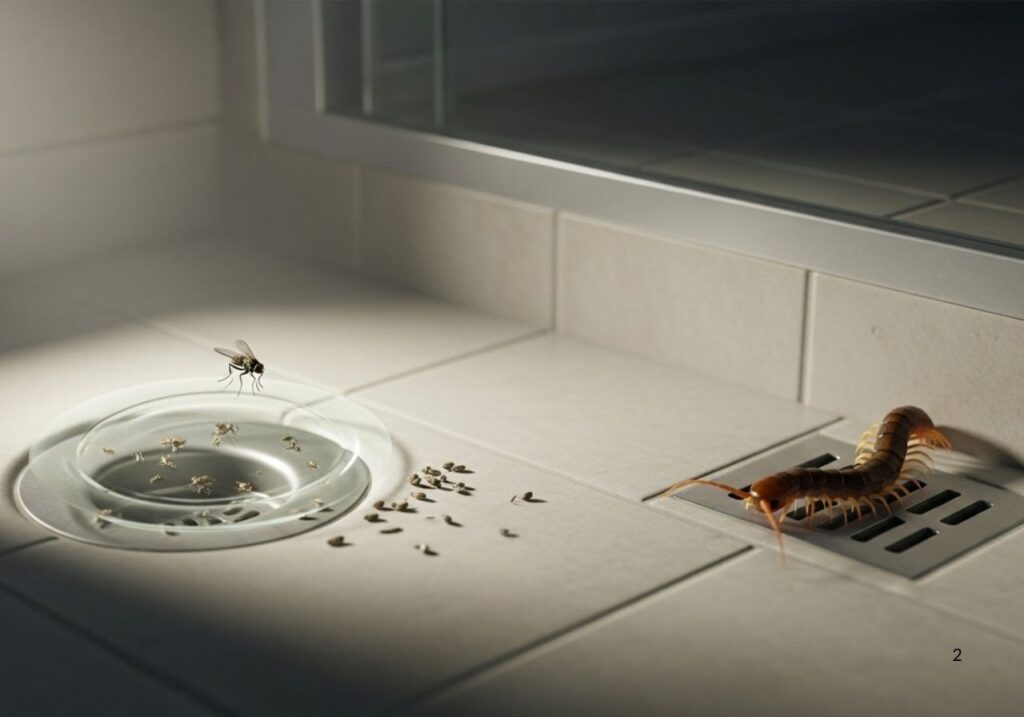
Warning Signs: How to Spot a Drain Pest Problem Early
Drain-related infestations often give subtle clues before turning into full-blown problems. Recognizing the signs of pests in drains early is key to stopping them before they spread.
Watch for these red flags:
- Foul or musty smells from sinks or tub drains
- Sudden presence of flying bugs—especially tiny, fuzzy drain flies
- Cockroaches or centipedes crawling out of floor drains or shower pipes
- Odd scratching or rustling noises from inside walls or under sinks
- Droppings or insect legs collecting near drain edges
Increased pest activity often pairs with seasonal changes. Come springtime in Rigby or after a few soggy summer weeks in Twin Falls, moisture levels can rise and drive pests through the pipes. If you’re spotting insects consistently near your bathroom or kitchen drains, it’s time to take notice.
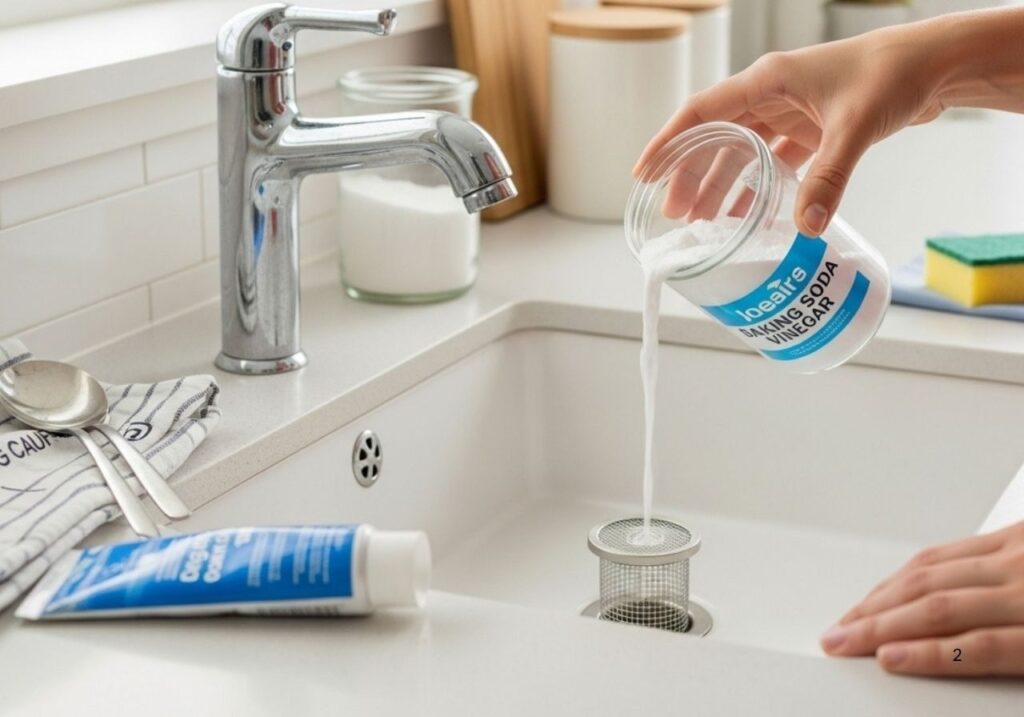
Simple Prevention Tips You Can Use Today
We don’t always need professional help to stop pests from getting comfortable in our drains. Regular upkeep can keep most plumbing areas bug-free.
Here are some practical, low-disruption steps for how to prevent pests in plumbing:
Easy At-Home Prevention Steps
Basic habits go a long way:
- Pour a mixture of baking soda and vinegar down each drain weekly—this helps clean residue where pests breed.
- Install fine mesh covers over showers and sink drains to block pest entry.
- Patch small gaps with caulk, especially where pipes pass through cabinetry or walls.
- Fix leaks quickly—standing moisture draws bugs and rodents alike.
- Schedule seasonal inspections to catch early pipe wear or openings.
Adding these steps into weekly family chores or post-dinner cleaning routines can keep pests out and reduce emergency calls later.
We always recommend safe DIY steps for regular upkeep. But keep in mind—some situations call for a deeper inspection. If you’ve tried these methods and still see pests from your drains, it’s time to reach out.
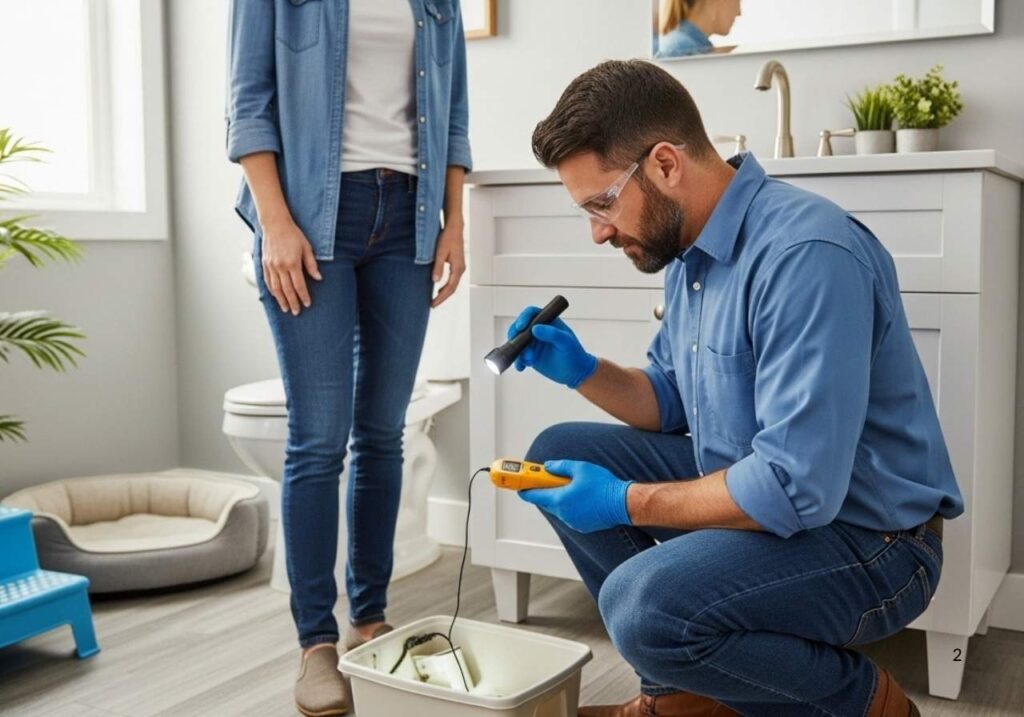
When to Call a Local Pest Professional
Some drain problems go beyond surface solutions. Persistent sightings—roaches that just keep coming back or drain flies swarming the same spot day after day—point to deeper issues. That’s when calling a licensed expert is smart.
There are a few other cases where professional help makes the most sense:
- You can’t locate where pests are coming from
- Children or pets are present and safety is a concern
- The infestation is growing or spreading to other areas of the home
- DIY cleaning isn’t making a difference
Reliable Eastern Idaho pest control professionals use efficient, non-invasive techniques to find the source and stop the problem at its root. We know local patterns, like how drain pests increase after irrigation runoff or mild winter weather.
At Falls Pest Services, we combine that local understanding with trusted methods to get results fast. Whether you’re in Idaho Falls, Pocatello, or out near rural areas, we know what pests you’re dealing with—and how to fix the issue safely.
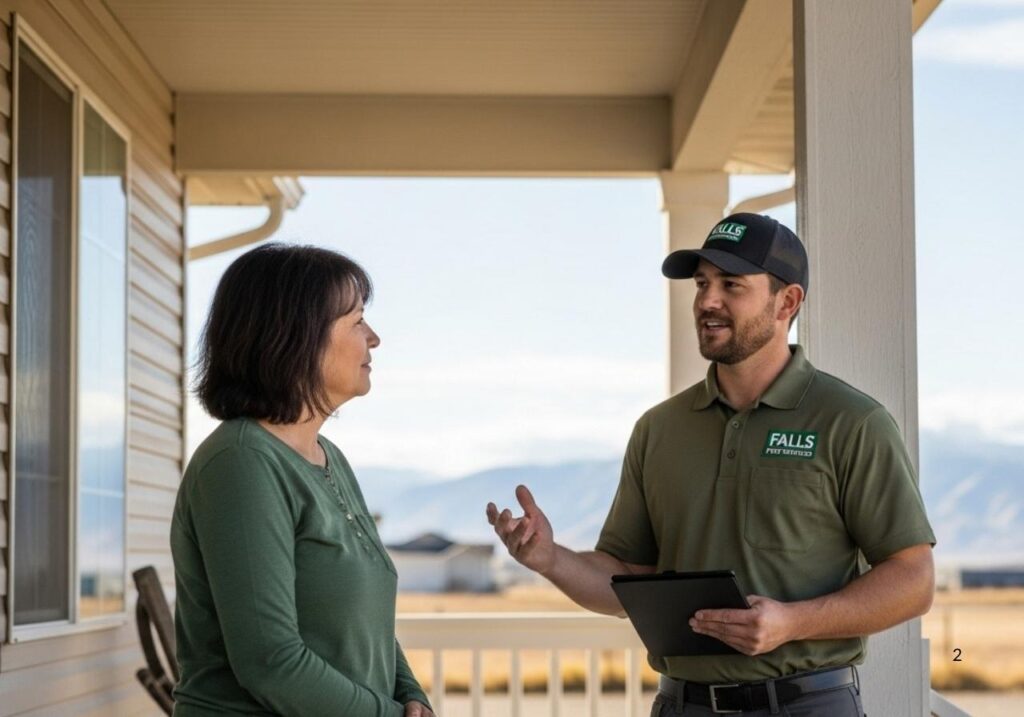
Reliable Help Is Just a Call Away
If you’ve noticed signs of pest activity in your drains, we’re here to help. Get in touch today for a friendly, no-pressure consultation.
Falls Pest Services is one of Eastern Idaho’s most dependable pest control providers—serving Idaho Falls, Rexburg, Pocatello, Rigby, and beyond. Whether you need residential pest control or commercial pest solutions, we stand for honesty, safety, and peace of mind.
We keep things simple and solutions effective—just like a trusted neighbor would. Let’s protect your drains, your home, and your family—starting today.
Frequently Asked Questions
Yes, pests can enter a home through drains when plumbing has cracks, loose seals, or open connections to sewer lines. Drains provide moisture, warmth, and food residue that attract insects and rodents. Once inside the plumbing system, pests can crawl or climb up into sinks, tubs, floor drains, and toilets, especially in older or poorly maintained systems.
The most common pests entering through drains include drain flies, cockroaches, rats, silverfish, and centipedes. These pests are attracted to damp environments and organic buildup inside pipes. Smaller insects breed in residue, while rodents can travel through sewer systems and exploit damaged pipes or uncapped drains to access homes.
Drains attract pests because they offer constant moisture, shelter, and food particles from soap, grease, and organic debris. Dark, undisturbed pipes create ideal conditions for nesting and breeding. If drains are not cleaned regularly or have leaks, they become a reliable habitat that encourages pests to stay and multiply over time.
Signs of pests entering through drains include foul or musty odors, frequent sightings of small flies near sinks, insects crawling out of drains, scratching sounds near pipes, and droppings around drain openings. These signs often appear before a full infestation, making early detection important for preventing larger pest problems.
The best way to prevent pests entering through drains is regular maintenance. Clean drains to remove buildup, install fine mesh drain covers, seal gaps around pipes, and repair leaks promptly. Keeping plumbing dry and intact removes the conditions pests need to survive and blocks common entry points into the home.