Bee Hive vs Wasp Nest: Key Differences to Look For
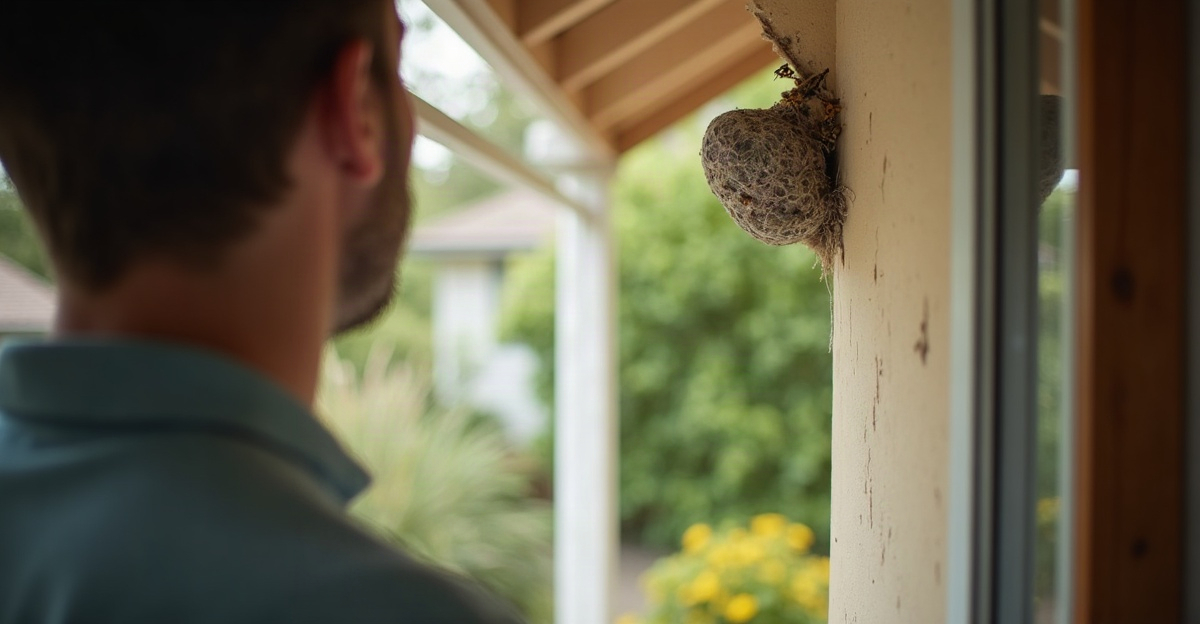
We compare bee hives and wasp nests by their materials and location. Honey bees build wax comb in protected cavities. Wasps often create paper-like nests in exposed or concealed areas. From a safe distance, we can assess nest shape, insect activity, and nearby entrances or gathering areas. These details help us decide when to call a pest professional.
Key Takeaways
- Honey bees build wax comb and often occupy hollow trees, wall voids, chimneys, and similar protected spaces.
- Paper wasps, hornets, and many yellowjackets create gray, tan, or brown paper-like nests from chewed wood fibers.
- Open comb beneath eaves may signal paper wasps. Enclosed paper nests or steady traffic at ground holes may signal other social wasps.
- Ground-level activity may involve yellowjackets or bumble bees, so location alone can’t confirm the nest type.
- We don’t recommend spraying, blocking, sealing, or disturbing an active nest. We recommend professional help if activity occurs near people, pets, entrances, or inside a structure.
Bee Hive vs Wasp Nest: What Is the Main Difference?
The easiest way to compare a bee hive vs wasp nest is to look at the material, shape, and location while remaining at a safe distance.
Honey bees produce wax and use it to form rows of comb. Wasps generally make their nests from chewed wood fibers mixed with saliva. This creates a paper-like material that may appear gray, tan, or brown.
Not every nest is visible. Bees and wasps can establish colonies inside walls, attics, trees, sheds, and underground spaces. In these cases, insect traffic may provide more useful clues than the nest itself.
Professional wasp, hornet, and bee control can help identify the insect and determine an appropriate response without requiring homeowners to approach an active colony.
What Does a Bee Hive Look Like?
Honey bees create wax comb made of repeating hexagonal cells. Colonies use these cells to raise young and store honey and pollen.
In natural settings, honey bees commonly choose protected cavities instead of building exposed nests. You may notice bees regularly entering and leaving a small opening rather than seeing the comb itself.
Common Honey Bee Nest Locations
Honey bees may establish colonies in:
- Hollow trees
- Wall voids
- Chimneys
- Roof spaces
- Attics
- Sheds
- Other protected cavities
If bees repeatedly enter the same opening in a wall or roofline, there may be a colony inside.
Do not seal the opening while insects remain active. Blocking an entrance can cause insects to search for another exit and may create additional problems inside the structure.
What Does a Wasp Nest Look Like?
Wasp nests vary widely between species.
Many social wasps build nests from paper-like material. The nest may be completely exposed, partly concealed, or hidden inside a structural void.
Paper wasps commonly build open nests with visible cells. These nests may hang beneath eaves, railings, ledges, or other sheltered surfaces.
Other social wasps may create larger enclosed nests with a layered outer covering.
Common Wasp Nest Locations
Depending on the species, wasps may nest around:
- Roof eaves
- Porch ceilings
- Deck railings
- Trees and shrubs
- Wall voids
- Attics
- Sheds
- Ground cavities
- Abandoned animal burrows
This variety is one reason location alone cannot always distinguish a bee hive vs wasp nest.
How Nest Materials Can Help With Identification
Nest material provides one of the clearest visual differences between honey bees and many wasps.
Honey bee comb has a waxy appearance with neat rows of cells.
Wasp nests often look more like paper or cardboard. Their surface may show layered or swirling patterns created from processed wood fibers.
Open Comb Does Not Always Mean Bees
An open pattern of visible cells can cause confusion.
Paper wasps also build exposed cells. Their nests often resemble a small umbrella hanging from a narrow stem.
Honey bee comb is usually larger and may include several vertical sheets of wax inside a protected cavity.
Avoid getting close enough to inspect individual cells. A pest professional can often make an identification from activity patterns, photographs taken from a safe location, and the nest’s position.
Watch How the Insects Move Around the Nest
Behavior can provide additional clues.
Honey bees may create steady traffic at an entrance as workers travel between the colony and food sources.
Social wasps can show similar traffic, particularly when their nest is hidden in a wall or ground cavity.
Watch from a safe distance and note:
- Where insects enter and leave
- Whether they use one opening repeatedly
- How many insects appear active
- Whether the nest itself is visible
- Whether activity is near doors or walkways
These observations can help a residential pest control professional understand the situation before an inspection.
Can Bees and Wasps Nest in the Ground?
Yes. Ground activity does not automatically mean you are dealing with wasps.
Yellowjackets may use underground cavities or abandoned burrows. Bumble bees can also establish colonies in protected spaces at or below ground level.
For that reason, a hole with flying insects around it should not be disturbed simply to determine what lives inside.
Do Not Cover an Active Ground Entrance
Avoid filling, plugging, digging around, or mowing directly over a suspected nest entrance.
Disturbance can increase defensive activity, particularly when the colony is active.
Keep children and pets away from the area until the insects can be properly identified.
Why Correct Identification Matters
Knowing whether you are looking at a bee hive vs wasp nest can affect how the situation should be handled.
Different species have different nesting habits, behaviors, and colony structures. Treatment or removal methods suitable for one insect may not be appropriate for another.
Honey bees may also require special consideration because colonies can leave wax and honey inside structures. Simply eliminating visible activity may not address material left behind within a wall or other cavity.
Correct identification helps determine what needs to happen next.
Signs a Nest May Be Inside Your Home
Sometimes insects are visible, but the nest is not.
Repeated traffic around a small exterior opening may suggest activity within the building.
Potential access points include:
- Gaps around siding
- Roofline openings
- Soffits
- Wall penetrations
- Vents
- Gaps around utility lines
- Cracks around windows or doors
You may also notice insects appearing indoors near windows or upper floors.
Do not automatically seal exterior gaps while insects are still entering and leaving.
When Should You Call a Pest Professional?
Not every bee or wasp seen around the yard means a nest is nearby. Bees and wasps regularly travel while searching for food and water.
Professional help becomes more important when you notice repeated activity in one location.
Consider calling for assistance when:
- A nest sits near a door or walkway
- Insects enter a wall or roof opening
- Activity occurs around children or pets
- A nest appears inside a building
- Ground activity occurs near regularly used areas
- The species cannot be identified safely
- Insect activity continues or increases
Falls Pest Services can assess bee, wasp, and hornet activity around residential properties and help determine where the insects are nesting.
What Should You Avoid Doing Around an Active Nest?
Avoid actions that could disturb the colony or block its normal exit.
We do not recommend:
- Hitting or knocking down an active nest
- Spraying an unidentified nest
- Blocking an active entrance
- Sealing wall gaps before resolving the colony
- Digging around a ground nest
- Standing close to photograph the nest
- Allowing children or pets near the area
Trying to identify insects at very close range creates unnecessary risk.
Instead, note the nest’s approximate location and insect activity from a safe distance.
How to Reduce Future Nesting Opportunities
After active nesting has been properly addressed, property maintenance can help reduce some future nesting opportunities.
Inspect the exterior periodically for gaps, damaged screens, openings around utilities, loose siding, and roofline defects.
Keep trash containers closed and remove unnecessary food residue from outdoor areas.
Trim vegetation when needed so building edges and exterior surfaces remain easier to inspect.
Sealing appropriate entry points should take place only after confirming that an active colony is no longer using them.
Get Help Identifying Bee and Wasp Activity
Distinguishing a bee hive vs wasp nest is not always possible from appearance alone.
Nest material, location, insect behavior, entrance patterns, and the surrounding structure all provide useful clues. However, hidden nests and similar-looking insects can make identification difficult.
Falls Pest Services can help inspect suspected nesting areas and determine whether bees, wasps, hornets, or another insect may be responsible.
If you notice repeated activity near your home, entrances, yard, or structural openings, contact us to arrange professional assistance.
Frequently Asked Questions About Bee Hives and Wasp Nests
How can you tell a bee hive from a wasp nest?
Look at the nest material and structure from a safe distance. Honey bees create wax comb, while many social wasps construct paper-like nests from chewed wood fibers. Location and insect activity can provide additional clues.
Are wasp nests usually gray?
Many paper nests built by wasps, hornets, and yellowjackets appear gray, tan, or brown. Color can vary depending on the wood fibers and materials the insects use, so color alone should not determine identification.
Do bees build nests under house eaves?
Some bee species may use openings or cavities around structures, but exposed open-comb nests beneath eaves are often associated with paper wasps. A professional inspection can help confirm the insect before any action is taken.
Can wasps build nests inside walls?
Yes. Some wasps and yellowjackets can establish colonies inside wall voids and other concealed spaces. Repeated insect traffic through a small exterior opening may indicate hidden activity.
Should I remove a bee hive or wasp nest myself?
Avoid disturbing, spraying, sealing, or attempting to remove an active unidentified nest. Activity near entrances, people, pets, or structures is safer to have assessed by a pest professional.