Why Wasps Keep Returning to the Same Area?
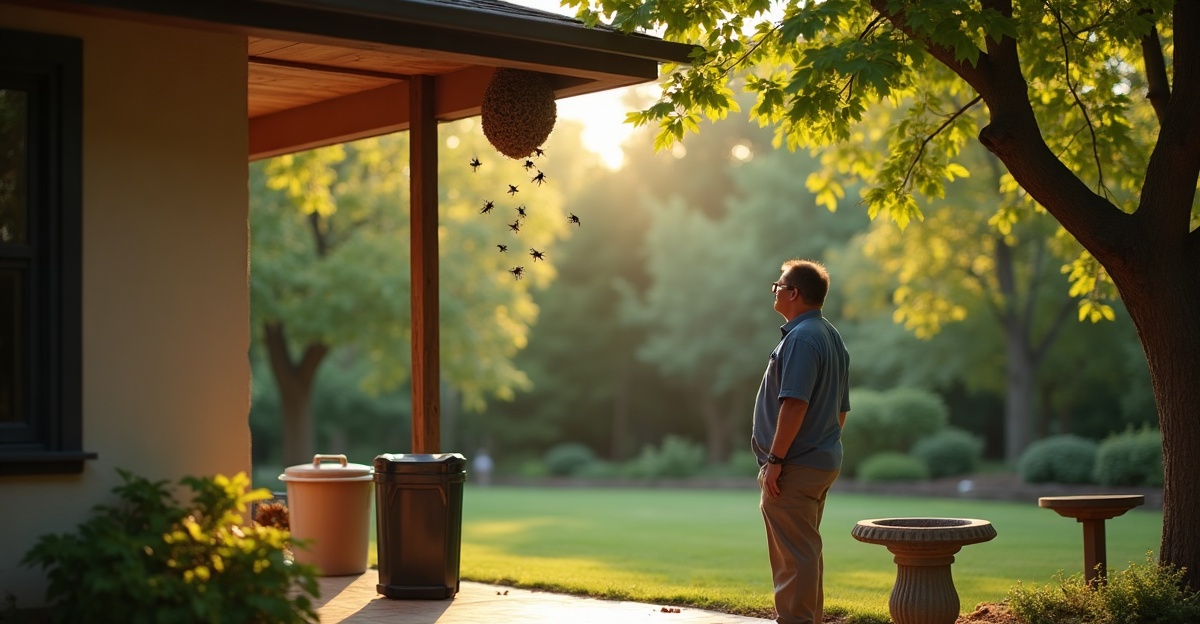
Wasps return to the same area when food, water, sheltered nest sites, and quiet conditions stay available. Most social wasps don’t reuse old paper nests. However, new queens may select the same favorable site each season.
Key Takeaways
- Protected spaces, including eaves, soffits, sheds, deck undersides, vents, and exterior gaps, can attract queens looking for nest sites.
- Open trash, fallen fruit, pet food, sugary drinks, outdoor cooking, and food residue create reliable food sources.
- Irrigation, leaking faucets, birdbaths, standing water, and livestock troughs can sustain regular wasp activity.
- Wasp activity often increases in late summer as colonies expand and workers forage more actively.
- Don’t disturb or seal an active nest. We recommend professional removal for nests near busy areas or inside structures.
Why the Same Area Keeps Attracting Wasps
Wasps keep coming back when a spot continues to offer food, water, shelter, and good nesting conditions. Repeat activity usually doesn’t mean the same nest or colony has returned, and it doesn’t mean a property is permanently infested.
Each season, a new queen may find the same protected location favorable. On Eastern Idaho properties, homes, acreage, patios, outbuildings, businesses, and outdoor gathering spaces can stay appealing year after year if the conditions remain unchanged.
People often describe this as wasp territory, but that term can be misleading. Wasps don’t permanently claim a property in the way the phrase suggests. A more accurate description is a preferred nesting area, reliable food source, or favorable foraging area.
Recurring wasp nests often point to the same practical conditions: sheltered structure gaps, nearby water, low disturbance, and dependable access to food. Learning signs of a pest nest can help us recognize activity before it becomes a larger concern.
Shelter, Entry Points, and Past Nesting Locations
Most social wasps don’t reuse an old paper nest the following year. Still, a previous nest location can attract a new queen because it shows that the area is sheltered and rarely disturbed. The old nest itself isn’t automatically being reused.
Protected sites often include eaves, soffits, rooflines, sheds, garages, barns, deck undersides, attic vents, utility openings, and gaps around trim. Wasps can also use openings around siding, vents, rooflines, and exterior fixtures to enter wall voids, attics, ceilings, crawlspaces, and other enclosed spaces.
Nearby features can also support activity. Fence lines, shrubs, woodpiles, ground-level cavities, and outbuildings may provide cover or nesting space. Reviewing common pest hiding places helps us identify areas that deserve a closer look from a safe distance.
Nest locations and removal needs can vary by species. People often use wasps, bees, and hornets interchangeably, but broad descriptions or photos don’t always provide a dependable identification. Understanding the difference between hornets and wasps can provide useful context, though an active or hidden nest may still need a professional assessment.
Food and Water Sources That Bring Wasps Back
Wasps often return to places with dependable food. Open garbage, recycling residue, pet food, fallen fruit, hummingbird feeders, sugary drinks, outdoor cooking, and commercial food waste can all create a reliable foraging area.
Across Eastern Idaho, common attractants include outdoor trash cans, restaurant patios, grills, outdoor dining areas, commercial dumpster enclosures, barns, and livestock areas. Wasps may repeatedly forage near patios or garbage zones because food and moisture are easy to find there.
Water matters, too. Irrigation, birdbaths, dripping outdoor faucets, standing water, livestock troughs, and pet water stations can keep wasps active near a building or gathering area. A small leak near a patio may seem minor, but it can support frequent wasp traffic during warm weather.
Late summer often brings the most noticeable activity around sweet drinks, food scraps, garbage, and outdoor meals. That pattern is common as established colonies search more actively for food. For areas such as porches and entryways, our guide on why wasps nest on porches explains why these sheltered spaces draw attention.
Why Wasp Activity Changes Through the Eastern Idaho Season
In early spring, queens begin looking for sheltered nesting locations. Roof overhangs, eaves, soffits, deck undersides, sheds, barns, fence lines, and quiet structural gaps can all provide suitable cover.
By late spring and summer, colonies grow and activity becomes easier to notice. More workers travel between the nest and nearby food or water, so places near irrigation, trash containers, patio spaces, and outdoor cooking areas can seem suddenly busy.
During late summer and early fall, wasps may be especially noticeable around sweet foods, drinks, garbage, patios, commercial outdoor dining spaces, and dumpster zones. A growing colony and increased food-seeking can make activity stand out, even if the nest began earlier in the season.
Visible wasps don’t always mean a new infestation has started. In many cases, the colony has simply grown large enough to create more frequent flights through an area. Regular observation from a safe distance helps us distinguish occasional foraging from activity that points to an active nest.
Low-Risk Ways to Make an Area Less Appealing
Sanitation and exclusion can reduce the conditions that draw wasps back. These steps won’t permanently eliminate wasps from every outdoor area, but they can reduce food, water, and sheltered access points around a property.
Practical Prevention Steps
We recommend starting with simple, low-risk maintenance:
- Keep trash and recycling containers closed, and rinse food containers when possible.
- Clean food residue and spills from patios, grills, outdoor dining spaces, and dumpster enclosures.
- Pick up fallen fruit and avoid leaving pet food outdoors for long periods.
- Repair dripping faucets and reduce unnecessary standing water near high-use areas.
- Inspect eaves, soffits, deck undersides, sheds, barns, and other outdoor structures early in the season from a safe distance.
- Keep doors, screens, and window screens in good repair to limit indoor wasp entry.
- Seal small exterior gaps only after confirming there is no active wasp traffic.
We shouldn’t spray, burn, flood, knock down, or seal an active nest. Disturbing a nest can trigger defensive stinging. Sealing an active entry point can also force wasps into wall voids or occupied indoor spaces. For additional prevention ideas, review natural wasp prevention methods that focus on reducing attractants.
When Active or Recurring Wasp Activity Needs Professional Help
Not every wasp sighting is an emergency. Concern increases when an active nest sits near doors, windows, patios, decks, play areas, garages, business entrances, or other high-traffic spaces. Professional help is also appropriate when wasps enter a wall, attic, ceiling, crawlspace, or another inaccessible area.
We recommend an inspection for repeated indoor wasp activity, large or elevated nests, hidden nests, difficult-to-reach locations, or properties with a known sting-allergy concern. Active nests near restaurant patios, customer entrances, employee areas, outdoor dining spaces, commercial dumpster zones, offices, warehouses, hospitality properties, and rental properties deserve prompt attention.
For residential concerns, our residential pest control team can assess nesting activity around living spaces and outdoor structures. Businesses can rely on commercial pest control support to address wasp activity around customers, staff, and operations.
Common Questions About Repeat Wasp Activity
Why do wasps keep coming back to the same spot? The spot likely continues to provide shelter, food, water, or a protected nesting location. A new queen may select the same area because conditions remain favorable.
Do wasps return to old nests every year? Most social wasps don’t reuse old paper nests. However, the same protected location may attract a new colony in a later season.
Does killing a wasp attract more wasps? Killing a single wasp doesn’t call in distant wasps. Disturbing or crushing a wasp near an active nest may increase defensive behavior from nearby colony members, so it’s best to avoid swatting around nest activity.
Why are wasps worse in late summer? Colonies are often larger by late summer, and workers spend more time searching for food. Sweet drinks, garbage, patios, grills, and gathering spaces can draw more visible activity.
When is a wasp nest dangerous enough to call pest control? We should call for help when an active nest is near people, wasps are entering a structure, stings are a realistic concern, or repeat activity continues despite cleanup and exclusion efforts. For guidance on an active nest, see what to do with a wasp nest.
For an active nest, wasps entering a structure, or recurring wasp activity, Falls Pest Services can assess the situation and recommend a targeted, site-specific approach while following label directions and appropriate safety practices. Our wasp control service provides dependable support for homes and businesses where wasps create an ongoing concern.