Mouse Droppings vs Rat Droppings: How to Tell the Difference
We can often tell mouse droppings from rat droppings by pellet size and shape. Mouse droppings usually look small and rice-shaped, with pointed ends. Rat droppings look larger and thicker, with blunt or tapered ends. Their location, quantity, freshness, and related signs, such as gnaw marks or nesting material, help us confirm rodent activity and choose the right next steps.
Key Takeaways
- Mouse droppings typically measure 1/8 to 1/4 inch long. Rat droppings usually measure 1/2 to 3/4 inch long.
- Fresh droppings often look dark, moist, or shiny. Older droppings usually look dull, gray, dry, or crumbly.
- Mice often leave many small droppings in cabinets, pantries, attics, garages, and near pet food. Rats often leave larger droppings along walls and in basements, crawl spaces, or storage areas.
- We shouldn’t sweep or vacuum dry droppings. We should wet them with disinfectant, wear disposable gloves, remove the material with paper towels, and disinfect nearby surfaces.
- We recommend a professional rodent inspection after repeated droppings, signs in multiple areas, damaged wiring, nests, or food contamination.
Quick Comparison: Mouse Droppings vs. Rat Droppings
Mouse droppings are usually small, rice-shaped pellets with pointed ends. Rat droppings are larger, thicker pellets that may look capsule-shaped, blunt-ended, or tapered depending on the rat species.
For mouse droppings vs. rat droppings, size offers one of the most useful first clues. Still, rodent droppings identification should include the location, amount, freshness, and other evidence around the property.
| Feature | Mouse Droppings | Rat Droppings |
|---|---|---|
| Typical size | About 1/8 to 1/4 inch long | About 1/2 to 3/4 inch long |
| Shape and ends | Rice-shaped and usually pointed at both ends | Thicker and larger, with blunt or tapered ends depending on species |
| Fresh appearance | Often dark brown or black, sometimes moist or shiny | Often dark brown or black, sometimes moist or shiny |
| Older appearance | Dull, gray, dry, or crumbly | Dull, gray, dry, or crumbly |
| Typical distribution | Many small droppings along feeding routes, cabinets, drawers, pantries, and nests | Fewer but more noticeable droppings along walls, near food, and in lower areas |
| Common locations | Kitchens, pantries, utility rooms, garages, attics, sheds, crawl spaces, and pet-food areas | Garages, basements, crawl spaces, warehouses, storage areas, exterior structures, and water or food sources |
Rat vs. mouse droppings can overlap in size and appearance. Diet, age, moisture, the age of the droppings, and the rodent species all affect what we find. A single pellet rarely confirms the exact animal. Squirrels, bats, and other wildlife can also leave waste that looks similar at first glance.
What the Location, Quantity, and Freshness of Droppings Can Tell Us
Location helps us understand the likely activity pattern. It works best when we consider it alongside pellet size, shape, and other signs of rodent infestation.
Mice often travel through sheltered, tight spaces. We may find droppings in pantries, kitchen cabinets, drawers, behind appliances, utility rooms, attics, sheds, crawl spaces, or around pet food and birdseed. Mouse droppings in garages often point to available shelter, stored materials, pet food, birdseed, or gaps that allow easy access.
Rats often leave evidence along walls and near dependable food or water. Rat droppings in a house may appear in basements, garages, crawl spaces, storage areas, and near exterior doors or utility openings. A home with repeated signs should also check rat entry points around the exterior.
Commercial properties need close attention as well. Warehouses, storage facilities, offices, employee break rooms, hospitality properties, small retail spaces, restaurants, food-preparation areas, food-storage areas, and customer-facing spaces can all provide food, shelter, or travel routes.
Fresh mouse droppings and fresh rat droppings may look darker, softer, or shinier than older pellets. That can suggest recent activity, but old droppings do not prove rodents have left. After safe cleanup, monitoring for new droppings provides a clearer answer.
Eastern Idaho homes and businesses often experience more rodent pressure during cold weather. Garages, crawl spaces, sheds, agricultural buildings, and outdoor structures can become attractive shelter when food and nesting materials are nearby. Repeated droppings in the same area may mark an active travel route, feeding site, or nesting area.
Other Signs That Help Confirm Mouse or Rat Activity
One pellet gives us a clue. A complete pattern of evidence gives us a much stronger answer about mouse infestation signs or rat infestation signs.
Look around the affected area for the following signs:
- Gnaw marks on food packages, wood, plastic, or wiring
- Rub or grease marks along baseboards, walls, pipes, and entry routes
- Tracks or tail marks in dust
- Rodent nest signs, including shredded paper, insulation, fabric, or plant material
- Noises in walls, ceilings, attics, crawl spaces, or wall voids
- Damaged food packages or contaminated stored goods
- Holes, damaged vents or screens, gaps under doors, and openings around the structure
Rodent gnaw marks on wiring, nesting material in living or storage spaces, and contamination near food deserve prompt attention. These signs can affect sanitation, stored belongings, and building materials.
We also recommend looking beyond the indoor evidence. Openings around utility lines, foundation gaps, damaged screens, and poorly sealed doors can explain how rodents are reaching the structure. For crawl space concerns, our guide on keeping rodents out of crawl spaces outlines useful prevention steps.
If the evidence is unclear, a professional inspection can help distinguish mice or rats from squirrels, bats, and other wildlife.
How to Clean Rodent Droppings Safely
Safe rodent droppings cleanup matters because droppings can contaminate food, surfaces, and stored materials. We should avoid treating every exposure as an emergency, but cleanup needs care and the right process.
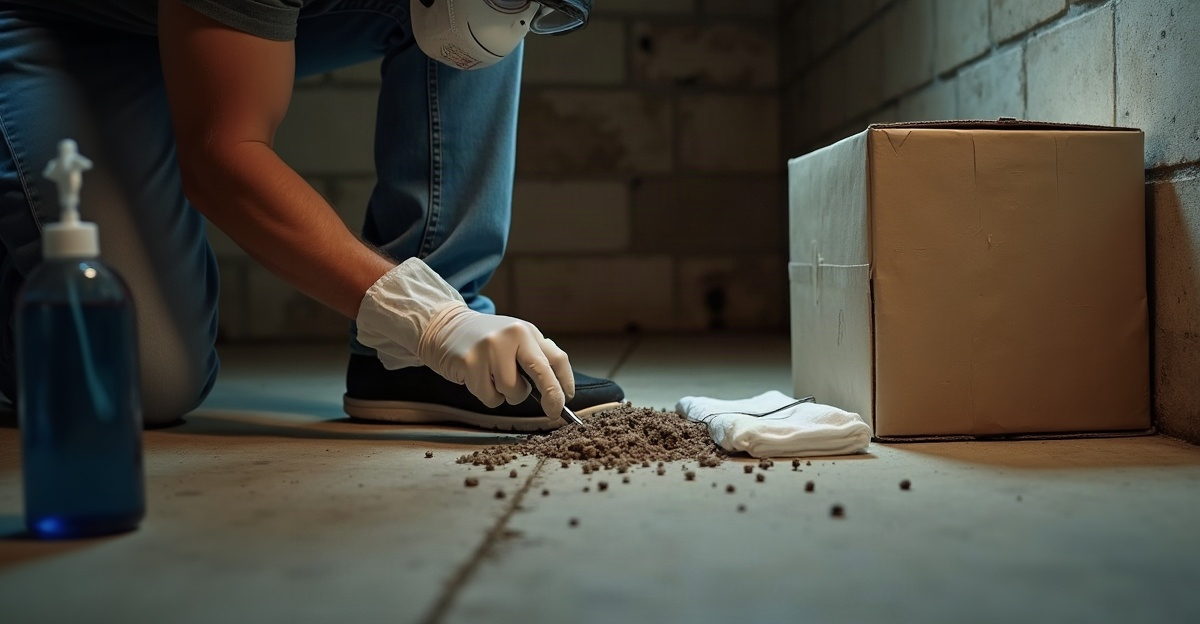
Do not sweep or vacuum dry droppings. Dry cleanup can disturb contaminated dust and spread it through the area. Keep children and pets away while cleaning, and ventilate enclosed spaces when appropriate before starting.
Wear disposable gloves. For heavy contamination, confined spaces, attics, or crawl spaces, additional appropriate protective equipment may be needed. Wet the droppings and nearby contaminated material thoroughly with disinfectant before removal. Then wipe everything up with paper towels, place the waste in a securely sealed bag, and wash hands afterward.
Disinfect nearby hard surfaces after removal. Discard food, packaging, or stored items that may have been contaminated. For how to clean mouse droppings, how to clean rat droppings, or extensive cleanup needs, we recommend reviewing current CDC rodent droppings cleanup guidance and applicable Idaho public-health guidance. Anyone with exposure-related medical concerns should contact a healthcare professional.
What to Do After We Find Droppings
Cleanup removes the immediate mess, but it does not solve the rodent problem. Effective rodent prevention requires us to remove food and shelter sources, find access points, address active areas, and monitor for new evidence.
Store human food, pet food, and birdseed in sealed containers. Clean crumbs, spills, grease, and clutter promptly. Kitchens deserve regular attention behind appliances, inside lower cabinets, and around pantry storage.
Garages and sheds should have organized storage, clean floors, and fewer nesting materials on the ground. In attics, basements, crawl spaces, and outbuildings, inspect for damaged vents, loose screens, utility gaps, and openings around pipes or wiring. We should also address water sources, vegetation against the building, gaps under doors, and stored materials placed close to exterior walls.
A careful exterior inspection helps us seal rodent entry points before activity grows. For additional prevention guidance, see what attracts rats and how to reduce those conditions.
Businesses should respond quickly to droppings near food preparation, food storage, customer areas, inventory, or employee break rooms. Sanitation and operational concerns can grow quickly in these settings. Ongoing activity may require professional commercial pest control and documented monitoring.
After cleanup, monitor without repeatedly handling suspected droppings. New pellets, fresh gnaw marks, or added damage indicate that mouse control or rat control efforts need to continue.
When to Call a Rodent Control Professional in Eastern Idaho
We recommend a professional inspection when droppings return after cleaning, appear in several rooms, or cover a large area. Help is also sensible when activity occurs in crawl spaces, attics, wall voids, HVAC areas, or other difficult-to-reach spaces.
Call for help when we find nests, gnawing damage, damaged wiring, or contamination near food. A qualified inspection is especially helpful if the source is uncertain or may involve wildlife rather than mice or rats. Restaurants, warehouses, rental properties, and other businesses may also need documented sanitation control and regular monitoring.
Can one dropping confirm mice or rats?
No. It may provide a useful clue, but size, shape, location, and supporting evidence should all guide the assessment.
How many droppings indicate an infestation?
There is no single number. Repeated fresh droppings, signs in multiple areas, or continued damage can indicate ongoing activity.
Do old droppings mean rodents are gone?
Not necessarily. Safe cleanup followed by monitoring for fresh evidence gives us a more reliable answer.
Should we call pest control for droppings in a garage, attic, or kitchen?
An inspection is a practical choice when droppings are repeated, widespread, near food, or located where access is difficult. We can also review early pest warning signs before activity becomes more established.
Falls Pest Services provides rodent control Eastern Idaho property owners can rely on. Whether the concern involves pest control Idaho Falls, mouse control Pocatello, or rat control Twin Falls, we can inspect the home or business, identify likely entry points, and recommend practical next steps. For dependable rodent control services, contact Falls Pest Services when frequent droppings or unclear rodent activity needs a professional assessment.