How Hotels Prevent Bed Bugs?
Hotel bed bug prevention combines routine inspections, trained staff, clear documentation, and prompt professional support. These measures reduce the risk of bed bug activity. Bed bugs can enter through luggage and personal belongings. Hotels need a consistent response plan. That plan should include room isolation, targeted inspections, treatment as conditions require, and follow-up monitoring.
Key Takeaways
- Clean hotels can still encounter bed bugs. These pests can hitchhike in luggage, clothing, furniture, and other belongings.
- Staff should inspect rooms between guest stays and during maintenance. Teams should focus on beds, furniture, cracks, seams, and luggage areas.
- Teams should document guest reports and possible signs. Staff should inspect these reports quickly, since bites alone do not confirm bed bug activity.
- Hotels should remove suspected rooms from service. Teams should limit unnecessary item movement and inspect connected rooms when appropriate.
- Professional inspections and property-specific treatment plans help hotels manage confirmed or suspected activity safely and discreetly.
Can Hotels Prevent Bed Bugs Completely?
Hotels can’t guarantee that bed bugs will never enter a property. Responsible hotels can greatly reduce the risk with consistent hotel bed bug prevention, early detection, and a fast professional response.
Bed bugs can arrive in guests’ luggage, clothing, furniture, or other belongings. A clean, well-managed hotel can still have a bed bug concern, since these pests hitchhike rather than appear because of poor housekeeping or neglect.
Prevention and response serve different purposes. Prevention reduces the chance of an introduction and helps staff find concerns early. Response begins after a guest report or suspected sign and includes isolating the room, inspecting, documenting findings, treating as needed, and monitoring afterward.
Bed bugs are primarily nuisance pests. Their bites can cause itching, skin irritation, sleep disruption, or allergic reactions for some people. However, bed bugs aren’t known to transmit diseases to humans.
Travelers can take reasonable precautions after a possible exposure without assuming bed bugs came home with them. Learning how to identify bed bug signs helps hotels and travelers respond based on evidence instead of worry.
Build a Hotel Bed Bug Prevention System
Effective hotel bed bug prevention relies on reliable daily procedures, not occasional room checks. Housekeeping, maintenance, and front-desk teams all play an important role. Staff should know how to recognize possible activity, report it quickly, and avoid assumptions about where bed bugs came from.
Employees may notice live bugs, shed skins, tiny pale eggs, dark spotting, or guest reports of unexplained bites. Bites by themselves do not prove bed bugs are present. Many conditions can cause similar marks, so staff should document the report and arrange an inspection rather than draw a quick conclusion.
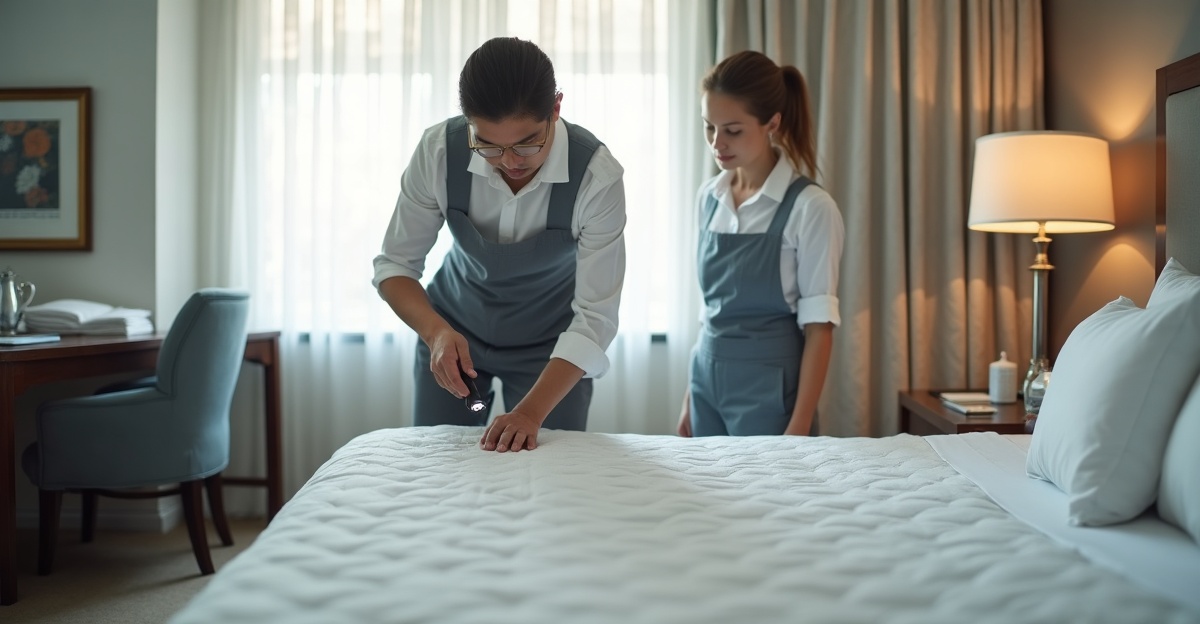
Room inspections should occur between guests and during routine maintenance. Teams should look closely at mattress seams, box springs, bed frames, headboards, upholstered furniture, nightstands, baseboards, cracks, seams, and luggage areas. Bed bugs can hide in very tight spaces, so visual checks alone may not always find early activity.
Good housekeeping and maintenance support hotel bed bug prevention. Hotels should reduce clutter, repair cracks, secure loose materials, and remove unnecessary hiding places. Protective mattress and box-spring encasements can also help as part of a complete prevention plan.
Hotel Bed Bug Prevention Checklist
A clear written process keeps staff calm and consistent. Hotels should:
- Train housekeeping, maintenance, and front-desk teams to recognize and report possible signs.
- Use documented inspection routines for guest rooms and maintenance work.
- Establish clear reporting and escalation steps.
- Keep records of inspections, guest reports, findings, and corrective actions.
- Prepare room-isolation procedures before a concern arises.
- Maintain a relationship with a qualified hospitality pest control provider.
- Schedule follow-up verification after treatment or a suspected concern.
For multi-room properties, professional commercial pest control gives managers a dependable plan for prevention, inspection, and response.
Use Monitoring, Documentation, and Professional Inspections
Monitoring tools and trained inspections can help identify possible activity when visual evidence is limited, unclear, recurring, or spread across several rooms. A hotel may need added support when a guest reports bites but staff can’t find physical evidence, or when similar reports arise in connected areas.
Documentation gives hotel teams a clear record of what happened and what comes next. Records should include the room number, report date, evidence found, inspection results, actions taken, treatment dates, and follow-up findings. Over time, these details can reveal patterns that a single report may not show.
A qualified professional assesses the property, evidence, room layout, and possible extent of activity before recommending a treatment plan. This careful review helps prevent unnecessary disruption while ensuring the hotel addresses the actual concern.
Hotels shouldn’t rely on unverified do-it-yourself remedies, foggers, or bug bombs. These methods can create safety concerns, push bed bugs deeper into hiding, and delay effective control. Falls Pest Services provides discreet inspections, responsive guidance, and practical prevention plans for hotels and property managers throughout Eastern Idaho. Our bed bug control services support both confirmed activity and suspected concerns that need a professional assessment.
What Hotels Should Do When Bed Bugs Are Suspected
Fast, organized action protects guests, limits disruption, and supports the hotel’s reputation. A report deserves respectful attention even when the evidence is uncertain.
- Take the guest or employee report seriously. Avoid moving luggage, linens, furniture, or other items unnecessarily, since movement can spread bed bugs into new areas.
- Remove the suspected room from service promptly. Document the report, photograph or preserve any evidence when appropriate, and record the room number and time of the concern.
- Arrange an inspection. Assess the room and inspect adjacent or connected rooms as appropriate. Bed bugs can move through gaps, furnishings, and guest belongings, so the scope of inspection should match the property layout and evidence found.
- Follow a property-specific treatment plan. A qualified hospitality pest control provider may recommend targeted applications, heat where appropriate, vacuuming, removal of hiding places, mattress and box-spring encasements, monitoring, and scheduled follow-up visits. No single approach fits every property or every level of activity.
- Verify before returning the room to service. Complete follow-up monitoring and inspection, then review the original report and corrective actions to confirm that the response followed the hotel’s prevention protocol.
Hotels preparing for professional service can review bed bug treatment preparation for helpful planning guidance.
Communicate With Guests Discreetly and Respectfully
Guest communication should be prompt, factual, and empathetic. Staff should avoid blame, speculation, or statements that minimize a guest’s experience. A calm response helps guests understand that the hotel is taking practical action.
Hotels should protect guest privacy while explaining the next steps under the property’s established response plan. Management can explain that the room will be assessed, belongings should remain in place until staff provides guidance, and the hotel will follow up with clear information.
Travelers who suspect bed bugs at a hotel should document possible signs if it is safe to do so and notify management promptly. They should avoid moving belongings into another room without staff guidance. Keeping luggage elevated and away from beds can limit exposure during travel.
After returning home, travelers should inspect luggage before bringing it indoors. Heat-drying travel clothing may be appropriate when the fabric permits it. Travelers shouldn’t spray belongings or use foggers at home after a hotel stay. A possible exposure doesn’t mean bed bugs came home. A careful inspection and measured precautions work better than panic.
Bed bugs may be found well beyond mattresses and sheets. Our guide on where bed bugs hide explains why luggage, upholstered furniture, and nearby cracks also deserve attention.
When to Call a Professional: Hotel and Traveler FAQs
Hotels should contact a professional after confirmed signs of bed bugs, repeated guest complaints, unexplained evidence, activity in multiple rooms, or internal prevention measures that haven’t resolved the concern. Travelers and homeowners should also call for help when they find evidence in luggage or at home, have bites combined with physical signs, or can’t settle a travel-related concern through inspection.
Can Clean Hotels Get Bed Bugs?
Yes. Bed bugs can enter any property through people and belongings, including clean, carefully managed hotels.
How Often Should Hotel Rooms Be Inspected for Bed Bugs?
Hotels should use documented inspections between guests and during routine maintenance. Professional inspections are helpful when signs are unclear, recurring, or widespread.
Should a Hotel Close After a Bed Bug Report?
Not necessarily. The affected room should be removed from service and assessed promptly. Adjacent or connected rooms may also need inspection based on the room layout and evidence.
Can Bed Bugs Travel Home in Luggage?
Yes. Bed bugs can hitchhike in luggage and personal belongings, which is why travelers should inspect items before bringing them inside. For added guidance, review signs of bed bugs at home after travel.
Are Bed Bugs a Sign of Poor Hotel Housekeeping?
No. Bed bugs aren’t caused by poor cleanliness and may be introduced into any hotel.
Hotels and property managers in Idaho Falls, Pocatello, Rexburg, Rigby, Twin Falls, and surrounding Eastern Idaho communities can contact Falls Pest Services for discreet inspection and dependable hospitality pest control. We provide Idaho Falls pest services, Pocatello pest control, and Twin Falls bed bug treatment for properties that need timely, professional support. For service questions or inspection scheduling, contact Falls Pest Services.