What Do Bed Bug Eggs Look Like and Where Do They Hide?
Bed bug eggs appear as tiny, pearly white or translucent oval specks. They measure about 1 millimeter long and often cling to protected surfaces in mattress seams, furniture folds, bed frames, and nearby cracks.
Eggs can resemble lint, paint flecks, or other debris. We should look for dark spots, shed skins, or live bed bugs before we confirm activity.
Key Takeaways
- Bed bug eggs measure about the size of a grain of salt or pinhead. Bright light and magnification help us spot them.
- Eggs usually hide in tight, sheltered spaces near areas where people sleep or rest. They rarely sit on exposed surfaces.
- We should inspect mattress seams, box springs, bed frames, headboards, upholstered furniture, luggage, and nearby baseboards.
- Eggs alone don’t confirm an infestation. Dark fecal spots, shed skins, and live insects offer stronger evidence.
- We should avoid moving suspected items into other rooms. A professional inspection can confirm the issue if we find several signs or can’t identify what we see.
Bed Bug Egg Identification: Size, Color, Shape, and Texture
Bed bug eggs are usually about 1 millimeter long, pearly white to translucent, oval-shaped, and roughly comparable to a grain of salt or a pinhead. For anyone asking what bed bug eggs look like, they are tiny, pale specks that may be difficult to see without bright light and magnification.
Eggs often sit in sheltered areas and may be attached, or “glued,” to a surface instead of lying loose in an open area. Their small size makes them easy to overlook in seams, cracks, fabric folds, and other protected spots.
Visual identification alone is not always reliable. We shouldn’t assume a white speck is a bed bug egg without finding several signs of bed bugs nearby. Lint, paint flecks, crumbs, adhesive residue, and other insect eggs can look similar. People may also search what does bed bug eggs look like or wonder what bed bug eggs look like after noticing pale debris on bedding or furniture.
For clear identification, we recommend using an original or professionally licensed close-up image labeled with scale. A comparison showing a 1-millimeter egg beside a grain of salt or pinhead gives a far more accurate view than an enlarged photo without a size reference.
Where Bed Bug Eggs Commonly Hide
Bed bugs usually place eggs in tight, protected spaces near where people sleep or rest. We rarely find them in the middle of an exposed floor, wall, or tabletop. Instead, they favor areas that provide cover and keep them close to a host.
Common hiding locations include mattress seams, piping, folds, and tags. Box springs can also hold eggs, especially beneath the fabric covering, along the edges, and near staples. Bed frames, headboards, joints, screw holes, cracks, and nearby baseboards deserve a careful inspection.
Upholstered furniture can provide many protected spaces. Check recliners, couches, cushions, seams, folds, and the undersides of furniture. Bed bugs can also arrive and spread through luggage, backpacks, clothing piles, recently used travel items, used furniture, and nearby clutter. Our guide on how bed bugs spread explains why limiting the movement of belongings matters.
Eggs may be found away from a bed if bed bugs were introduced through belongings or if people frequently rest elsewhere. Couches, offices, hotels, rental units, and other sitting areas can become activity sites. Learn more about bed bugs beyond beds if suspicious signs appear in another room.
How Bed Bug Eggs Differ From Look-Alikes and Other Bed Bug Signs
Eggs alone don’t confirm an infestation. We look for several signs in the same general area before drawing conclusions. A careful comparison can help separate possible eggs from common household debris.
Quick Identification Guide
Here’s what we typically look for during an inspection:
- Bed bug eggs: Tiny white or translucent oval specks, sometimes attached to a protected surface.
- Shed skins: Tan to light brown, papery, hollow-looking insect skins left behind as bed bugs grow.
- Fecal spots: Small dark brown or black marks on seams, fabric, wood, mattresses, or nearby surfaces.
- Live bed bugs or nymphs: Visible insects. Young nymphs can appear pale or nearly translucent, especially before feeding.
- Common look-alikes: Lint, crumbs, dust, fabric fibers, paint flecks, adhesive residue, and eggs from other insects.
Repeated bites may raise concern, but bites alone can’t identify bed bugs. We recommend checking for live insects, shed skins, dark spotting, and possible eggs together. Our resources on bed bug warning signs and identifying bed bugs can help us recognize the full picture.
Bed bugs aren’t a sign of poor housekeeping. They can occur in clean homes, hotels, offices, apartments, and other properties after hitchhiking on luggage, clothing, used furniture, or other belongings.
How to Check Suspected Areas Without Spreading Bed Bugs
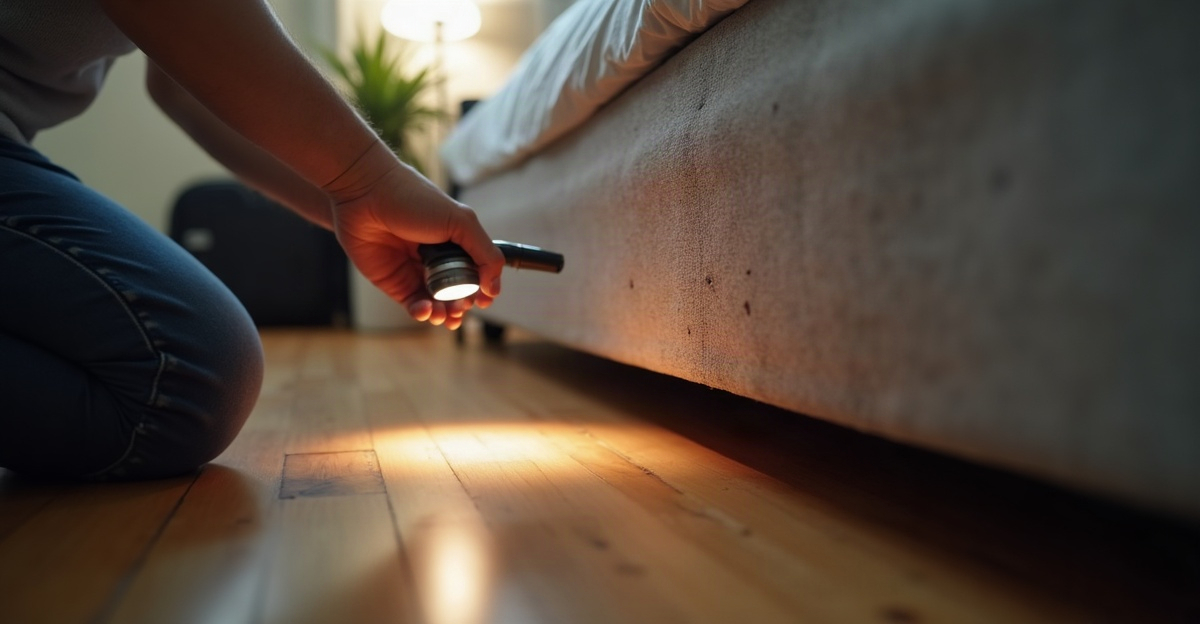
Use a flashlight and a magnifying glass if available. Inspect seams, tags, crevices, cracks, screw holes, and protected areas slowly. Fast inspections and frequent movement of items can cause bed bugs to scatter into new hiding places.
Keep potentially affected items in the room where we found them whenever possible. Avoid carrying luggage, bedding, furniture, backpacks, or loose belongings through the home or business. We also don’t recommend sleeping in another room without professional guidance, since bed bugs may follow hosts or establish activity in the new area.
If we need to save a possible sample, clear tape or a sealed container can work when practical. Avoid handling suspected material directly. Don’t throw furniture out immediately. Disposal can spread the issue and may be unnecessary with the right treatment plan.
Reducing clutter near beds and upholstered furniture can make an inspection easier, but don’t relocate belongings to other rooms. Washable bedding and clothing can be laundered according to care labels. For fabrics that allow it, drying on high heat can be useful.
Vacuuming, store-bought sprays, essential oils, or one round of cleaning may not eliminate an established infestation or all eggs. Avoid unverified remedies that can scatter bed bugs or interfere with professional treatment. If treatment becomes necessary, our bed bug treatment preparation guide outlines practical next steps.
When a Professional Bed Bug Inspection Is the Most Reliable Next Step
We recommend a professional inspection if we find multiple signs, can’t identify what we’re seeing, notice repeated bites, live in multi-unit housing, or manage a business. An experienced inspection helps distinguish bed bugs from lint, debris, paint flecks, and other look-alikes.
Our process starts with a focused inspection of likely hiding areas and the evidence present. From there, we explain treatment recommendations based on the property and findings, provide preparation guidance, and schedule follow-up service as needed. We don’t rely on guesswork or make one-size-fits-all promises.
Falls Pest Services provides bed bug control services for homes and businesses. We also offer residential pest control and commercial pest control for ongoing property protection.
For hospitality properties, offices, rental properties, restaurants, warehouses, and other small businesses, bed bugs can arrive through employee, guest, tenant, or customer belongings. A prompt, discreet assessment helps limit disruption. Avoid moving potentially affected furnishings or belongings, document the location of the sighting, and arrange an inspection.
We serve Idaho Falls, Pocatello, Rexburg, Rigby, Twin Falls, and surrounding communities. Review our service areas or explore Twin Falls bed bug treatment options for local support. If suspicious white specks, dark spotting, shed skins, or possible live bed bugs appear in an Eastern Idaho home or business, contact our team to schedule an inspection and discuss the next steps.
Common Questions About Bed Bug Eggs
Can We See Bed Bug Eggs With the Naked Eye?
Bed bug eggs are about 1 millimeter long, so we can sometimes see them without magnification. Bright light and a magnifying glass often make inspection more reliable.
Eggs may feel like fixed specks because females can attach them to sheltered surfaces. We shouldn’t identify them by touching or handling them.
Do Bed Bug Eggs Mean There Is an Active Infestation?
Possible eggs don’t always confirm active bed bug activity. Visual identification can be unreliable, so we look for multiple signs and recommend professional confirmation when evidence is unclear.
Egg hatch timing can vary based on conditions, especially temperature. Rather than relying on a set timeline, we recommend prompt inspection if possible eggs or other bed bug signs appear.
Bed bug eggs can be found away from a bed, particularly in upholstered furniture, luggage, clothing piles, backpacks, offices, hotel rooms, and areas where people rest. Clean homes and businesses can also get bed bugs after they hitchhike in on belongings, furniture, luggage, or clothing.
After a suspected sighting in a hotel, office, or rental property, avoid moving affected furnishings or belongings. Document the location and arrange a discreet professional assessment as soon as possible.