Are Pest Control Chemicals Safe After They Dry?
Are pest control chemicals safe after they dry? Understanding pest chemical safety indoors requires us to explain what “dry” truly means. Once we apply a treatment correctly and it fully dries, the liquid carrier evaporates. The active ingredient then bonds to the surface. That bond greatly reduces the chance of transfer during normal daily activity.
We rely on products that the EPA approves for indoor use. Labels guide every step. When we follow them closely, treatments dry into a stable residue that stays where we place it. Families can then return to routine activities with confidence.
Dry time plays a key role in safety. Most indoor treatments dry within one to four hours. Ventilation, humidity, and surface type affect that window. We often increase airflow to speed up drying and reduce odors. Good air circulation supports both comfort and safety.
Application technique matters just as much as chemistry. We focus on cracks, crevices, and hidden entry points. Targeted placement using crack-and-crevice pesticide application methods recommended in integrated pest management helps keep exposure low while still controlling pests. This approach supports effective results without overapplying product.
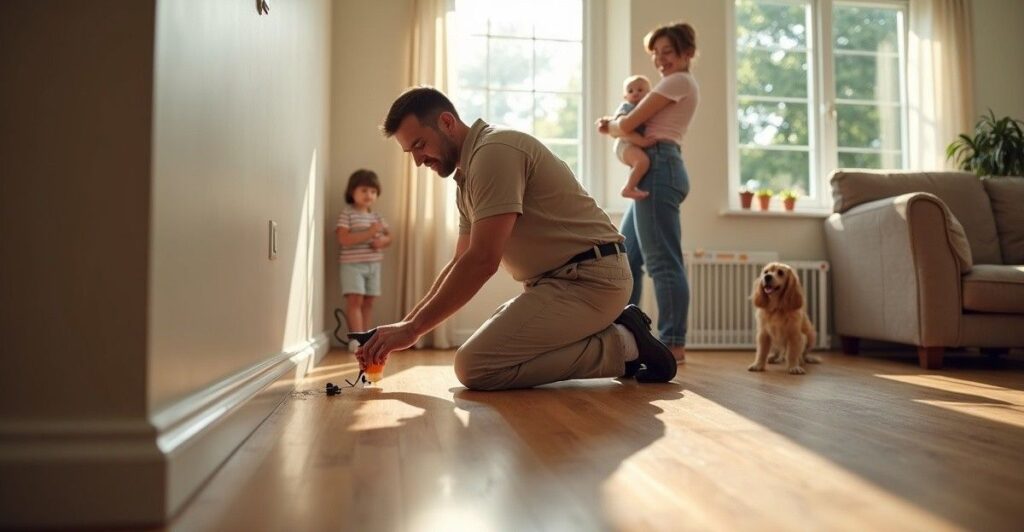
Children and pets require extra care. We always recommend keeping them away from treated areas until surfaces dry completely. Once dry, residues stay fixed to baseboards, wall voids, or flooring edges, which limits direct contact during everyday movement.
Communication strengthens safety. We explain what we apply, where we apply it, and how long drying will take. Clear instructions help everyone feel prepared and informed.
Key Takeaways
- “Safe after it dries” means the liquid has evaporated and the remaining material bonds to the treated surface, lowering contact risk when we apply it correctly.
- Re-entry time typically ranges from 1–4 hours, depending on the product, ventilation, humidity, and surface type.
- We ensure proper dilution, targeted placement in cracks and crevices, and strict adherence to label instructions to support indoor pest control safety.
- We keep children and pets out of treated areas until surfaces fully dry to minimize exposure.
- We prioritize clear communication, written guidance, and careful application by trained professionals to keep treatments effective and low-risk.
What “Safe After It Dries” Really Means Indoors
When we talk about pest chemical safety indoors, “safe after it dries” has a specific meaning. It doesn’t mean the product disappears. It means the liquid carrier has evaporated, and the remaining active ingredient has bonded to the treated surface, a process explained in EPA guidance on indoor pesticide residues and exposure.
While a treatment is wet, there’s a higher risk of contact and transfer. Shoes, hands, or paws can pick up material more easily. Once the application dries, the likelihood of transfer drops significantly when it’s been applied correctly.
Many people ask, are pesticides safe after drying? In most residential settings, properly applied products are designed to pose minimal risk once fully dry. The key word is properly. Indoor pest control safety depends on correct dilution, accurate placement, ventilation, and strict adherence to labeled instructions — not simply the passage of time.
EPA registration means products have been evaluated for use as directed under the EPA pesticide registration and labeling process. That evaluation considers exposure in homes and businesses. However, safety always depends on using the product exactly as the label requires. No pesticide is completely safe in every situation. Responsible application is what makes treatments low-risk and effective.
For a deeper look at how materials behave indoors, we recommend reading are pest control products harmful indoors, which explains how professional applications reduce everyday exposure.
How Long Until It’s Safe to Go Back Inside?
Re-entry time after pest control is typically once treatments are fully dry. In most cases, that’s between 1–4 hours. The exact timing depends on the product used, airflow, humidity, and surface type.
Pest spray drying time varies. A treatment applied along baseboards in a well-ventilated home may dry quickly. An application in a humid basement with limited airflow may take longer. That’s why clear instructions matter.
A professional service professional should always provide written and verbal guidance before leaving. We explain how long until pesticides are safe indoors for that specific visit. If ventilation is recommended, light airflow — such as opening windows or running fans — can speed drying and improve comfort.
Modern indoor applications are formulated to dry quickly and minimize airborne exposure. Once dry, treated areas are meant to stay in place where pests travel, not circulate through the air.
Those who want more detail about timelines and what happens next can review what to expect after a pest treatment, where we outline typical drying and activity patterns.
How Professionals Minimize Indoor Exposure
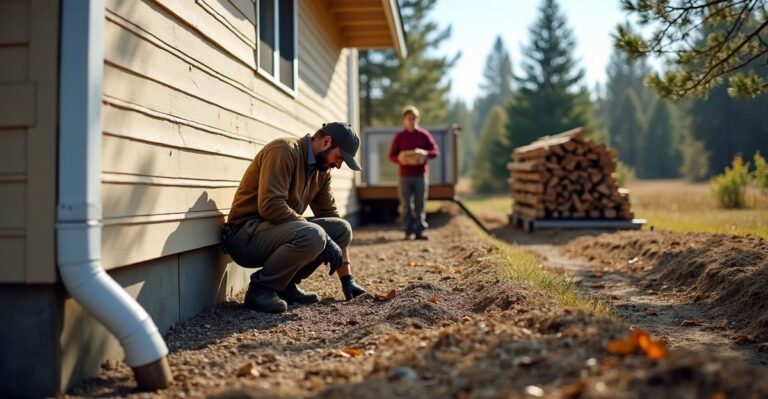
Safe pest control for homes starts with targeted application. In Eastern Idaho properties, we commonly treat baseboards, cracks, crevices, and entry points rather than open living surfaces.
For ants and spiders, limited baseboard applications and exterior perimeter treatments are common. For wasps, we focus on nest sites and exterior voids. For rodents, we prioritize sealing entry points and placing materials in protected areas, as explained in our rodent control services overview.
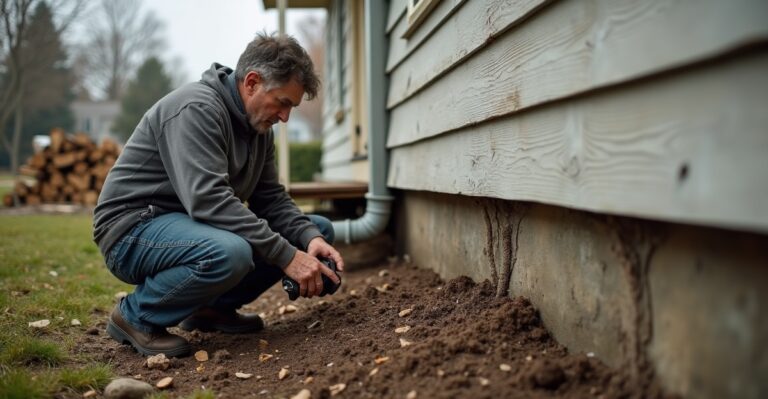
Crack-and-crevice treatments are especially important for indoor pest control safety. These methods place materials inside wall voids, behind appliances, or along hidden gaps where pests hide. That reduces broad exposure in living spaces.
Professional pest control safety standards require service professionals to follow labeled mixing rates and application methods. Placement centers on pest harborage areas and entry points — not countertops, toys, or frequently handled surfaces.
Food preparation areas receive special attention. If treatment near those areas is necessary, we provide guidance about covering items before service and wiping food-contact surfaces afterward when appropriate. Clear communication keeps everyone comfortable and informed.
For a wider view of how services are structured, visit how pest control services work, where the process is explained step by step.
Safety Considerations for Children, Pets, and Sensitive Spaces
Pest control safety for children is one of the most common concerns we hear. Kids spend time on floors and often put their hands in their mouths. That behavior makes proper drying time important.
We recommend keeping children and pets out of treated areas until everything is fully dry. That simple step significantly lowers contact risk. After drying, treatments applied to baseboards and cracks are unlikely to transfer during normal daily activity.
Pest control safety for pets follows the same principle. Dogs and cats should stay off treated surfaces while wet and shouldn’t be allowed to lick recently treated areas. Birds and reptiles can be more sensitive due to their respiratory systems. In some cases, temporary relocation during treatment may be the safest option.
This topic comes up so often that we’ve covered it in detail in our guide on how safe pest treatments are for pets, including practical steps for households with animals.
Businesses in Idaho Falls, Twin Falls, Pocatello, Rexburg, and Rigby also need thoughtful planning. Waiting rooms, daycare areas, and food service spaces require careful scheduling and communication. In commercial settings, we coordinate treatment timing to support both compliance and comfort. Our commercial pest control services focus on targeted placement and clear re-entry guidance.
When applied correctly and fully dry, modern treatments are intended to pose minimal risk during everyday use scenarios. Clear instructions and patience during drying make a meaningful difference.
Practical Steps We Can Take for Added Peace of Mind
A few simple steps support indoor pest control safety before and after service.
- Before treatment: Ask what products will be used and what re-entry time after pest control to expect.
- Prepare the space: Store pet bowls, children’s toys, and food items away from areas being treated.
- After treatment: Wait until surfaces are completely dry before resuming normal activity.
- Ventilate if advised: Open windows or run fans if recommended to help with pest control ventilation after treatment.
- Avoid immediate cleaning: Don’t mop or wash treated areas unless instructed, as this can reduce effectiveness.
- Follow surface guidance: Wipe food-prep surfaces if your service professional recommends it.
Open communication is essential. Reputable providers are always willing to explain the products used and why. Safe pest control for homes relies on partnership between service professionals and property owners.
Choosing a Provider Who Prioritizes Safety and Transparency
Responsible pest control practices are easy to recognize. Look for clear communication, labeled products, detailed re-entry guidance, written instructions, and a willingness to answer questions.
Safety depends on product selection, correct dilution, careful placement, ventilation, and proper drying time. Trained professionals manage each of these steps. That’s why working with an experienced local company matters.
In Eastern Idaho, we regularly address ants, spiders, wasps, roaches, and rodents in both homes and businesses. Our residential pest control services are structured around targeted applications and straightforward communication so families feel confident about pest chemical safety indoors.
Every property is different. Concerns about children, pets, or specific rooms deserve a thoughtful conversation. We encourage open questions and clear planning before any treatment begins. Those who want to talk through their situation can reach out through our contact page to schedule a consultation and discuss the safest approach for their space.
Frequently Asked Questions
Yes, pest control chemicals are generally considered safe indoors once they have fully dried when applied according to the product label. Drying means the liquid carrier has evaporated and the active ingredient has bonded to the treated surface. This bonding reduces the chance of transfer during normal activity. Proper dilution, targeted application, and good ventilation all help ensure indoor pest chemical safety.
Most indoor pest control treatments dry within one to four hours. The exact drying time depends on factors such as humidity, airflow, surface type, and the product used. Increasing ventilation with fans or open windows can speed the process. Waiting until surfaces are completely dry is an important step for maintaining pest chemical safety indoors.
Children and pets can usually return to treated areas once pest control products are fully dry. When the residue bonds to surfaces like baseboards or cracks, the risk of transfer during everyday activity becomes very low. However, it’s important to keep kids and animals away during application and drying to support proper pest chemical safety indoors.
Indoor pest spray drying time is influenced by ventilation, humidity, temperature, and the type of surface treated. Hard surfaces such as tile or sealed wood often dry faster than porous materials like unfinished wood. Running fans, opening windows, or improving air circulation can help treatments dry more quickly and support safe indoor pest control conditions.
Professionals focus on cracks and crevices because these hidden areas are where many pests travel or hide. Targeted placement reduces the amount of product used while still controlling pests effectively. This method also limits contact with frequently touched surfaces, which helps improve pest chemical safety indoors and lowers unnecessary exposure in living spaces.