Bed Bug Bites vs Mosquito Bites: Which One Bit You?
Bed bug bites and mosquito bites can look similar. Both often cause itchy red bumps, so bite marks alone can’t reliably identify the pest. Mosquito bites often follow outdoor exposure. Suspected bed bugs call for checking sleeping areas, furniture, and luggage for physical evidence.
Key Takeaways
- Bite location, timing, and patterns may offer clues, but they can’t confirm whether bed bugs or mosquitoes caused the marks.
- Mosquitoes commonly bite uncovered skin after time outdoors, though they can also bite indoors.
- Bed bug signs include live insects, shed skins, pale eggs, dark spots, and possible blood stains near beds or resting areas.
- We recommend avoiding furniture moves, foggers, and mattress disposal before confirming a bed bug issue. These actions can spread pests or create unnecessary costs.
- Request a professional inspection if physical signs appear, bites continue without a clear source, or the concern affects people at home or work.
Bed Bug Bites vs Mosquito Bites: Why They Can Be Confusing
Comparing bed bug bites vs mosquito bites can be difficult because people react differently to insect bites.
Both pests can leave raised, itchy, red areas on the skin. Some people develop noticeable swelling, while others may show very little reaction.
The appearance of a bite does not provide enough evidence to identify the pest with certainty.
A better approach is to combine the bite history with clues from the surrounding environment. Professional pest control can also help determine whether bed bugs, mosquitoes, or another pest may be responsible.
Look Beyond the Bite Marks
Instead of focusing only on redness or swelling, consider:
- Where you were before the bites appeared
- Which areas of skin were exposed
- Whether bites appear after sleeping
- Whether mosquito activity is common nearby
- Whether you recently traveled
- Whether you used secondhand furniture
- Whether you can find physical pest evidence
These clues can narrow the possibilities without relying solely on skin appearance.
What Do Mosquito Bites Usually Look Like?
Mosquito bites commonly appear as itchy, raised bumps.
They often occur on uncovered areas such as the arms, legs, ankles, neck, or face. A person may notice the bite shortly after being outdoors, although reactions can appear at different times.
Mosquito activity is usually more likely around areas with standing water, vegetation, and outdoor gathering spaces.
Professional mosquito control can help address recurring activity around residential properties.
Common Clues That Suggest Mosquito Exposure
Mosquitoes may be more likely when:
- Bites follow time outdoors
- Several people notice mosquitoes nearby
- Bites appear on exposed skin
- Standing water exists around the property
- Mosquito activity increases around dawn or dusk
- Windows or doors allow insects indoors
Remember that mosquitoes can also enter homes, so an indoor bite does not automatically point to bed bugs.
What Do Bed Bug Bites Usually Look Like?
Bed bug bites may also cause itchy, raised, red marks.
They are often associated with sleeping or resting areas because bed bugs typically feed when a host remains still for an extended period.
Some bites may appear grouped or in short lines. However, that pattern is not exclusive to bed bugs.
A person may also have no visible reaction at all.
That is why professional bed bug control focuses on finding physical pest evidence rather than diagnosing an infestation from bites alone.
Where Bed Bug Bites May Appear
Bed bugs may feed on exposed skin while someone sleeps.
Common areas can include:
- Arms
- Shoulders
- Neck
- Face
- Hands
- Legs
Bite location alone cannot confirm bed bugs. Other insects and skin conditions can cause similar marks.
Check the Sleeping Area for Bed Bug Evidence
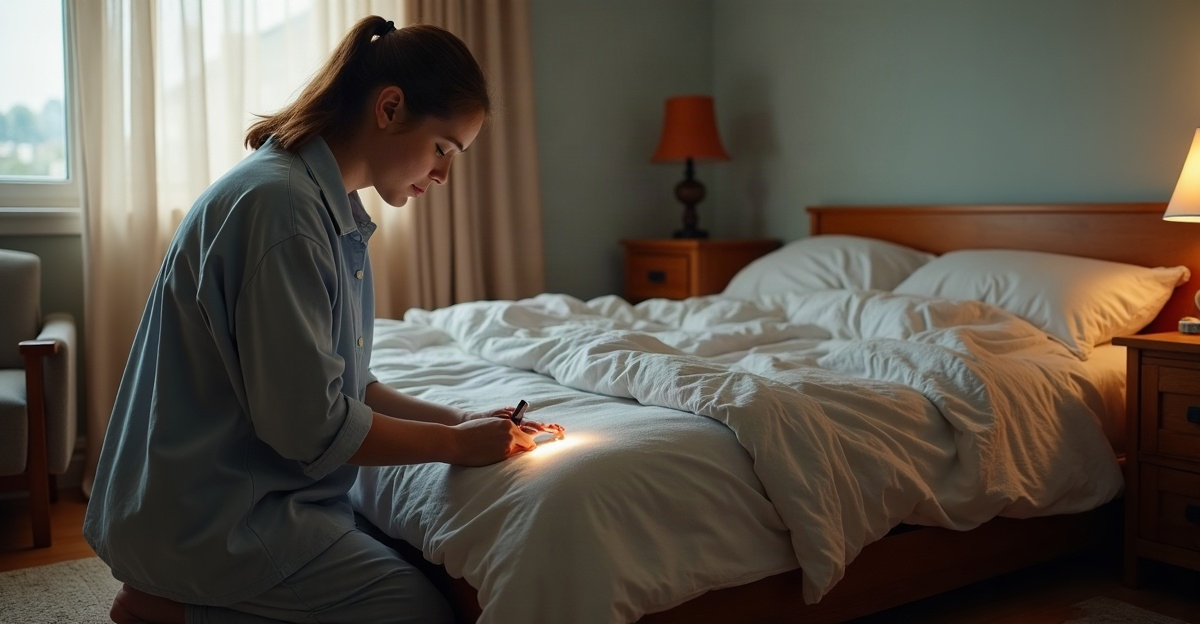
If bites repeatedly appear after sleeping, inspect the area carefully.
Bed bugs tend to hide in narrow cracks and seams close to where people rest.
Check:
- Mattress seams
- Box springs
- Bed frames
- Headboards
- Nightstands
- Upholstered furniture
- Baseboards
- Cracks near the bed
Use a flashlight and inspect slowly.
Look for Physical Bed Bug Signs
Possible evidence includes:
- Live bed bugs
- Shed skins
- Pale eggs
- Small dark spotting
- Possible blood stains on bedding
- Insects hiding in seams or cracks
One unexplained mark on a sheet does not confirm an infestation. Look for several pieces of evidence together.
If you are uncertain about what you find, avoid disturbing the area more than necessary.
Consider Recent Travel and Furniture Changes
Bed bugs can move between locations by hiding in luggage, bags, clothing, furniture, and other belongings.
Think about recent activities if unexplained bites begin suddenly.
Possible risk factors include:
- Hotel stays
- Overnight travel
- Moving
- Bringing home used furniture
- Visitors staying overnight
- Shared living spaces
Travel history alone does not mean bed bugs are present, but it may justify a closer inspection when other signs appear.
Check the Property for Mosquito Conditions
When mosquitoes seem more likely, inspect the outdoor area.
Mosquitoes need water for their early life stages. Even small amounts of standing water can create suitable breeding conditions for some species.
Check areas such as:
- Buckets
- Planters
- Birdbaths
- Gutters
- Tarps
- Children’s toys
- Pet bowls
- Wheelbarrows
- Outdoor containers
Empty unnecessary standing water and correct drainage problems where possible.
A broader residential pest control plan can also help identify pest conditions around the home.
Why Bite Timing Is Not Enough to Identify the Pest
People often try to separate bed bug bites vs mosquito bites based on when itching begins.
Unfortunately, reactions do not always appear immediately.
One person may notice irritation soon after exposure, while another may not notice it until later.
This makes timing an unreliable way to identify the pest.
Instead, compare the timing with environmental evidence. For example, bites after several evenings outdoors plus visible mosquito activity provide different clues from repeated bites after sleeping plus bed bug evidence around a mattress.
Do Not Move Furniture if You Suspect Bed Bugs
Moving furniture from one room to another may spread bed bugs to new areas.
Avoid carrying mattresses, chairs, or upholstered furniture through the house before confirming the problem.
Also avoid immediately throwing furniture away.
Bed bugs can often be addressed without discarding every item in the room. Unnecessary disposal can also create additional cost.
Avoid Foggers for Suspected Bed Bugs
Total-release foggers are generally not a reliable way to reach bed bugs hiding deep in cracks, furniture, and wall voids.
They may also cause insects to move into other areas.
A targeted inspection helps identify where activity is occurring before treatment decisions are made.
When Should You Call a Pest Professional?
Consider a professional inspection when you have repeated bites and cannot identify the source.
You should also seek help when physical pest evidence appears.
Common reasons to call include:
- Live bed bugs are found
- Dark spotting appears around a mattress or furniture
- Shed skins or eggs are present
- Bites continue after sleeping
- Mosquito activity remains heavy around the property
- Several household members report unexplained bites
- You cannot tell which pest may be involved
Falls Pest Services can inspect the property and look for evidence that helps identify the pest responsible.
What to Do While Waiting for Identification
Until the pest is confirmed, focus on observation rather than aggressive treatment.
Write down when and where bites appear. Note recent outdoor activity, travel, sleeping locations, and pest sightings.
For suspected bed bugs, inspect sleeping areas without moving furniture between rooms.
For suspected mosquitoes, reduce standing water and check window and door screens.
Avoid applying multiple pesticides without knowing which pest you are targeting.
When Should You Seek Medical Advice?
Most insect bites cause temporary irritation, but some reactions may need medical attention.
Seek medical guidance if you develop concerning symptoms, severe swelling, signs of infection, or a reaction that continues to worsen.
Do not rely on a pest inspection to diagnose a skin condition.
Pest professionals identify pest activity in the property. Healthcare professionals evaluate symptoms affecting your health.
Prevent Future Bed Bug and Mosquito Problems
Prevention depends on the pest.
For bed bugs:
- Inspect luggage after travel
- Be careful with secondhand furniture
- Watch mattress and furniture seams for activity
- Avoid moving infested belongings between rooms
For mosquitoes:
- Remove standing water
- Maintain screens
- Keep gutters draining
- Address outdoor water collection
- Monitor high-activity areas
Regular inspection makes it easier to notice pest activity before it becomes more difficult to manage.
Get Help Identifying the Source of Bites
The key difference when comparing bed bug bites vs mosquito bites is not always visible on the skin.
Environmental evidence provides stronger clues.
Mosquito activity may connect with outdoor exposure and standing water. Bed bug concerns call for inspecting beds, furniture, luggage, and nearby hiding places for physical signs.
Falls Pest Services can help inspect suspected pest activity and determine whether bed bugs, mosquitoes, or another pest may be present.
If unexplained bites continue or you find physical evidence around your home, contact us to discuss professional pest control options.
Frequently Asked Questions About Bed Bug Bites vs Mosquito Bites
How can I tell a mosquito bite from a bed bug bite?
You usually cannot identify the pest from the bite alone. Consider where and when exposure occurred and look for physical evidence. Bed bug signs around sleeping areas or visible mosquito activity provide stronger clues.
Do bed bug bites always appear in a line?
No. Bed bug bites may sometimes appear grouped or in a line, but this pattern does not occur in every case and cannot confirm bed bugs by itself.
Can mosquitoes bite you while you sleep indoors?
Yes. Mosquitoes can enter through open doors, windows, damaged screens, or other gaps and may bite people indoors, including while they sleep.
What are the clearest signs of bed bugs?
Stronger evidence includes finding live bed bugs, shed skins, eggs, dark spotting, or insects hiding around mattress seams, furniture, bed frames, and nearby cracks.
When should I call pest control for unexplained bites?
Request an inspection when bites continue without a clear source, you find physical signs of bed bugs, mosquito activity remains heavy, or pest activity begins affecting several people in the home.